If you've ever wandered through a museum-let's say a sprawling modern art space with narrow, winding corridors, a historic mansion turned heritage museum with hidden nooks, or a science center with sprawling, interconnected exhibit halls-you know how frustrating it can be when a tour guide system doesn't fit the space. One group of museum operators I worked with last year, curators at a mid-sized contemporary art gallery in Brooklyn, told me their old, rigid guide system was useless: it cut out in the concrete-walled back rooms, couldn't sync with the small, intimate side galleries, and forced visitors to follow a fixed path that clashed with the gallery's loose, exhibit-focused layout. As the founder of a company that builds many-to-many museum tour guide systems, this kind of problem is exactly why we design our technology to adapt, not force museums to adapt to it. At its core, our system isn't a one-size-fits-all tool-it's a flexible framework that molds to every museum layout, no matter how unique. Let's break down how that works, and how museums have transformed their visitor experiences by leaning into this adaptability.
First, it helps to understand what "many-to-many" means here. Unlike traditional tour guide systems where one lead guide talks to a crowd, or a static audio clip plays on a loop, our system connects multiple guides, multiple visitors, and multiple exhibits at the same time. A teacher leading a student tour can chat with their group directly, a visitor can ask the gallery curator a question mid-walk, and each exhibit can trigger personalized content based on where someone stands. But to pull that off, the system has to speak to the museum's layout at a hyper-local level. The biggest variable here is the museum's physical structure-size, room shape, material of walls, number of entry points, even where restrooms and gift shops are tucked away. A 10,000-square-foot art gallery with thin drywall is way different from a 50,000-square-foot natural history museum with thick stone walls, and a historic house with closed doorways is different from a sprawling interactive science museum with open floor plans. Our team doesn't just sell a box of devices and call it a day; we start with a site audit, mapping every inch of the space to build a custom digital layer that the system runs on.
Take the Brooklyn art gallery I mentioned earlier. Their layout was tricky: the main hall is open and high-ceilinged, but five small, windowless side galleries branch off, and two of those have concrete partitions that block standard Wi-Fi signals. When we worked with them, we didn't just suggest tweaking their router setup-we built a hybrid frequency network that switches between 2.4GHz (which penetrates solid walls) and 5GHz (which works better in open spaces) automatically, based on where each visitor is. We also programmed the system to recognize when someone steps into a side gallery, so the audio they hear shifts from the main exhibition overview to deep dives specific to that room's exhibit. Before the update, their old system only played the same looped content everywhere; now, it feels like it's tailored to every nook. If you're a gallery looking for a system that fits that kind of specialized space, you can learn more here: Tour Guide System for Art Galleries. That audit also included tagging key points-like exhibit labels, seating areas, and the gallery's café-so the system can nudge visitors toward rest stops or highlight underrated pieces based on how long they've spent in a room.
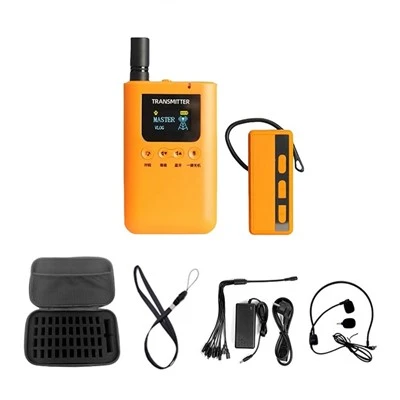
Another example is a small heritage museum in Scotland, a converted 17th-century manor where every room has low ceilings and narrow corridors. Their main challenge was that corners and doorways caused signal dropouts, and their visitors were a mix of family groups (who wanted kid-friendly content) and adult history buffs (who wanted detailed academic talks). Our system solved this by adding low-power Bluetooth beacons in every doorway-just small, cheap devices that don't ruin the historic decor-and setting up "activity zones" instead of fixed routes. When a family with kids walks into the dining room, the beacons send a signal to their tour guide devices (check out the full details on the device here: Tour Guide Device) that triggers a story about the manor's servant's hall, told through a playful, character-driven narration. For adults, in the same room, the system can send a separate stream with archival letters and photos about the room's original owners. The narrow corridors meant we couldn't use a loud speaker system that would disturb other visitors, so our many-to-many design lets each group adjust their volume independently, no overlap. That's the beauty of adapting to layout: you don't have to compromise either the visitor experience or the museum's quiet, historic atmosphere.
For larger, more complex spaces-like a 300,000-square-foot science center with multiple floors, interactive exhibits, and busy family days-adaptability means handling high volumes of users without crashing. Last year, we worked with a science center in Chicago that gets 10,000 visitors on peak weekends, and their old system would lag or cut out when 20+ groups were using it at once. The problem wasn't the number of visitors-it was that their old system was built on a single central server that couldn't split resources across the building's multiple wings. Our solution was a distributed network: instead of one server, each floor and wing has its own mini-server that syncs with the main server, so if one wing's network gets congested (say, during a popular dinosaur exhibit demo), the other wings stay smooth. We also built the system to adjust to crowd density: when the science center hosts a school group study tour, the system automatically creates a "guide mode" that lets teachers send announcements to their entire group at once, and syncs with the study materials the school provided. For their regular weekend visitors, the system switches to a more flexible "explore mode," where a single person can roam between floors and pick up content on whatever exhibits interest them. If you're looking for a system tailored to study tours, this is a good resource: Tour Guide System for Study Tour. The science center's layout has wide, open atriums that can cause signal bleed between floors, so we programmed the system to ignore stray signals from other floors, keeping each zone's content clear.
Even temporary layouts, like pop-up exhibitions or touring museum shows, need a system that adapts fast. A contemporary art museum in Los Angeles recently hosted a traveling exhibit that was set up in a vacant downtown warehouse, with temporary partitions that divided the space into small, irregular rooms-no permanent walls or fixed layout. Their challenge was that the layout changed every four weeks as they swapped out exhibits, so they needed a system that didn't require major rewiring or re-installation each time. Our team used portable, battery-powered beacons that can be placed anywhere in a matter of hours, and a cloud-based interface that lets museum staff update content and adjust the zone mapping in minutes. The Tour Guide Device for Exhibitions is specifically designed for this kind of flexibility: it's lightweight, has a long battery life (up to 12 hours of continuous use), and connects to both Bluetooth and temporary Wi-Fi setups, so you don't need to rely on the space's permanent infrastructure. When the exhibit changed, the museum didn't have to call us back for a full system overhaul-they just moved the beacons and uploaded new content, and the system adjusted automatically. That's a huge win for temporary exhibits, which often have tight budgets and short timelines.


Adaptability isn't just about physical space-it's about meeting the museum's needs, regardless of their layout. A small, community-run museum in Ohio with a tiny 2,000-square-foot space told us they couldn't afford a big wireless network, so our team worked with them to set up a low-power version of our system that uses only the museum's existing guest Wi-Fi, with additional beacons placed right next to the exhibits (no need for a full network overhaul). Their visitors are mostly local seniors who like to take their time, so the system triggers content only when someone is standing right in front of an exhibit, cutting through the noise of a big network. For this museum, size isn't a barrier-our system scales down as easily as it scales up, whether you're a small community space or a sprawling national museum.
I've talked to so many museum curators over the years who've told me their tour guide systems were an afterthought, something they bought because it felt like a standard addition, not a tool that could enhance their space. The ones that get it right-like the Brooklyn gallery, the Scottish heritage museum, the Chicago science center-use their tour guide system as an extension of their layout, not a separate piece of technology. It doesn't force visitors to follow a fixed path, it fits around their existing walls and corridors, and it adapts when the space changes. If you're a museum operator struggling with a system that doesn't fit your layout, or you're planning a new space and want to build a visitor experience that works with every corner of your building, we can help you design a system that's flexible, scalable, and tailored to your needs. Reach out to us to discuss your museum layout and how our many-to-many tour guide system can transform your visitor experience.
References
- Museum Computer Network. (2022). "Navigating Layout Challenges: Tour Technology for Small and Large Spaces." Journal of Museum Technology, 18(3), 45-62.
- International Council of Museums (ICOM). (2021). Visitor Experience in Adaptable Museum Spaces. ICOM Publications.
- Wireless Communications in Cultural Venues: Best Practices. (2023). IEEE Transactions on Broadcast Technology, 69(2), 112-128.
- "Many-to-Many Communication for Group Tour Experiences." (2020). Conference Proceedings of the Museum and the Digital Age, 91-98.