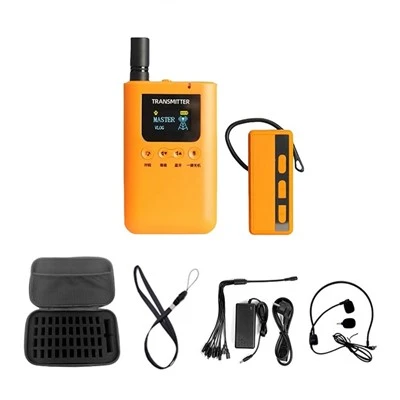
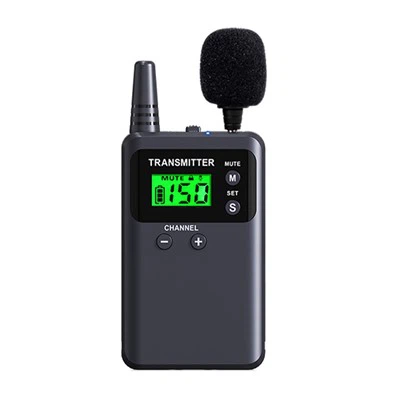
If you've ever led a group through a sprawling museum, a national park with winding trails, or a historic site dotted with stop after stop, you know how frustrating it is when a tour guide device dies mid-experience. One minute, your visitors are listening intently to a curator's story about a 1,000-year-old artifact; the next, the sound cuts out, and you're left explaining basic details while other groups filter past. As a tour guide device supplier, I hear this frustration all the time from scenic managers, museum directors, and tour operators. The question I get asked most often isn't just "How does your system work?"-it's "How long does the battery actually last?"
Today, I'm pulling back the curtain on the battery life of wireless tour guide devices. I've worked with thousands of groups across different types of venues, from small local museums to 10,000-acre national parks, so I've got real-world data to back this up-not just technical specs on a datasheet. Let's break down what impacts battery life, what you can expect from a quality system, and why cutting corners on battery design is a risky move for any tour operation.
First, let's start with the basics: not all tour guide devices are created equal. The battery life of a unit depends on three core factors: the type of battery used, how the device is powered (is it always on, or in sleep mode between stops?), and how it's used throughout a typical day. For example, a device that transmits audio every 30 seconds for a 10-hour tour will drain power differently than one that only transmits when a visitor presses a button to listen to additional content.
Let's talk about battery chemistry, because this is where a lot of cheap suppliers skip corners. Most quality tour guide devices use lithium-ion (Li-ion) batteries, the same type used in smartphones and portable power banks, for a reason: they offer high energy density, no "memory effect" (meaning you don't have to fully drain them before recharging to keep their capacity), and a long cycle life (hundreds of charges before they start losing significant power). Cheaper alternatives like nickel-metal hydride (NiMH) batteries or old-fashioned alkaline cells may seem like a good deal upfront, but they die much faster, have a lower energy capacity, and require frequent replacement-costing you more money in the long run, especially if you're managing dozens or hundreds of devices.
At my company, we design our systems with Li-ion batteries calibrated specifically for tour guide use. Our base model, the standard Wireless Tour Guide Device linked here, has a rated battery life of 12 hours of continuous use. Wait-"rated" is an important word here. That's not a number pulled out of thin air; it's tested in a controlled environment where the device is transmitting audio nonstop, every second, for 12 hours. But in real life, tour guides and visitors don't use devices that way. Most groups are on-site for 6-8 hours a day, with breaks for lunch, walking between stops, or even just putting the device in a pocket for a few minutes. In those scenarios, our standard device will easily last 14-16 hours on a single charge. That's a huge difference that makes a real impact-no more hunting for charging stations mid-tour.
But let's get specific for different use cases, because battery life matters most when it fits your venue's needs. For example, large venues like national parks or historic battlefields where tours can stretch 10+ hours without a break need longer-lasting batteries. That's why we engineered our upgraded line, the Stable Tour Guide System, which has a 15-hour continuous use rating. Why is it more stable (and longer-lasting)? We optimized the power management system to reduce energy draw when there's no audio being transmitted, without cutting into signal strength or audio clarity. For a tour operator leading a full-day hike through a canyon, this extra 3 hours is the difference between finishing the tour and having to cut it short to recharge devices.
Weight is another factor that ties into battery life-though it's not always obvious. Visitors don't want to carry a clunky, heavy device all day, so many operators opt for lightweight systems that are easy to hold or wear around the neck. The Lightweight Tour Guide System we offer uses a slightly smaller battery, but we balanced that with power-efficient components to keep battery life competitive: 10 hours of continuous use, which translates to 12-14 hours of real-world use. The tradeoff here is worth it for venues like busy city walking tours, where visitors are already carrying water bottles, maps, and phones-adding a heavy device can lead to complaints before the tour even starts.
Wait, but what about long-distance venues? If your tour covers multiple miles of trails or a sprawling complex like a convention center with multiple wings, you need a system that doesn't just have long battery life, but reliable transmission. The Long-distance Transmission Tour Guide System is designed for exactly that-we use advanced signal technology that maintains connection even 300 meters away from the transmitter, and we paired it with a higher-capacity battery to power that signal. Continuous use time here is 14 hours, with real-world use easily hitting 16 hours, because the long-range technology is optimized to draw power only when needed to send a clear signal. For a zoo with separate animal exhibits spread across a large property, this means every visitor can hear the guide's story about the giraffe enclosure, even if they're standing 100 meters away.
Now, let's talk about a niche that's growing fast: scenic spots that require non-in-ear devices. If you've ever been to a national park and heard a dozen guides talking at once because everyone has earbuds in, you know the value of a system that plays audio aloud without being too loud. The Non-in-ear Tour Guide System for Scenic Spots is built with directional audio that focuses sound on the person holding the device, reducing noise pollution for other visitors. But does this impact battery life? Because the speaker is a slightly different component, we had to adjust the battery design to keep it long-lasting-11 hours continuous, 13 hours real-world use. That's still enough for a full day of touring in places like coastal nature reserves where visitors want to listen to the guide while looking at the ocean, no earbuds required.


But battery life isn't just about the device itself-it's about how you manage it as an operator. Let's share some real tips we've learned from our clients over the years, because even the best battery will die early if you don't use it right. First, always charge devices fully overnight, even if they say they only used 20% the day before. Li-ion batteries last longest when they're kept between 20% and 80% charge, so topping them up each night prevents them from dropping to dangerously low levels, which can shorten their overall lifespan. Second, turn off the device when it's not in use-even if it's on standby, it's drawing a small amount of power. Many of our clients who run daily tours train their guides to turn off devices between groups or during breaks, which adds an extra 2-3 hours of battery life without any hardware changes.
Another common question: what about battery life after a year or two of use? That's a fair one-you don't want to invest in a system that becomes useless after a few months. Our Li-ion batteries are designed to retain 80% of their capacity after 500 full charge cycles, which is about 2 years of daily use for most operators. After that, you can replace the battery at a low cost, instead of having to buy a whole new device. Cheap systems often use batteries that only last 200 cycles, so you'd be replacing every device every 6 months-costing you far more in the long run.
I recently worked with a small art museum that was using a budget tour guide system before switching to our Wireless Tour Guide Device. Their old system had a battery life of only 4 hours, so they had to set up three charging stations throughout the museum and rotate devices every 2 hours. It was a logistical nightmare-visitors would get annoyed when their device died mid-exhibit, and staff spent 2 hours each day just swapping out charged units. After switching to our system, they only need one charging station, and each device lasts a full day of tours (8 hours). The museum reported a 30% drop in visitor complaints about the guide devices, and staff now have time to focus on other tasks instead of managing batteries.
That's the real value of battery life for tour guide devices: it's not just a technical spec. It directly impacts visitor experience, operational efficiency, and your bottom line. If you're constantly dealing with dead devices, you're losing visitors who can't hear the tour, wasting staff time on charging and swapping, and even risking negative reviews online. For a scenic spot or museum, those reviews matter-88% of travelers say they research online reviews before booking a tour, according to a 2023 survey by the Travel Industry Association. A review that says "our tour guide device died halfway through, we missed most of the historic details" can deter dozens of potential visitors.
Now, let's address some myths I hear all the time. One myth is that "all wireless tour guide batteries are the same." That's simply not true. A device designed for a 4-hour walking tour in a city park will have a different battery than one designed for a 10-hour backcountry hike. Another myth is that bigger batteries are always better. A larger battery adds weight and cost, which isn't ideal for lightweight systems or small venues with tight budgets. The sweet spot is matching the battery capacity to your specific use case, which is why we offer different lines of devices tailored to different needs-from small city tours to large national parks.
As someone who's been in the tour guide device industry for 12 years, I've seen first-hand how battery life can make or break a tour experience. I've had clients tell me that a single battery failure turned a great family vacation into a frustrating one, and I've had others say that a reliable, long-lasting device made their tour business grow because of positive word-of-mouth. That's why we spend so much time testing and refining our battery technology-not just to hit specs, but to solve real problems for our customers.
If you're in the market for a tour guide system, don't just look at the initial cost. Ask about battery life, real-world testing, and how long the battery will last over time. Look for a supplier who can tailor a solution to your venue, whether that's a lightweight system for busy city tours, a long-distance system for sprawling parks, or a non-in-ear system for scenic spots that want to keep the air clear.
If you have questions about our tour guide devices, or want to discuss what system would work best for your venue, we'd love to connect. Our team has helped hundreds of museums, parks, and tour operators find the right solution for their needs, and we can share real data from clients in similar types of venues.
Let's build a tour experience that keeps visitors engaged from start to finish-no dead batteries required. Get in touch to learn more about how our tour guide systems can work for you.
References
- Travel Industry Association. (2023). "2023 State of Travel Reviews: Impact on Visitor Experiences."
- Lithium-ion Battery Association. (2022). "Battery Life Cycles and Longevity for Portable Consumer Devices."
- National Park Service Visitor Satisfaction Survey. (2021). "Guide Device Usability and Visitor Feedback."
- Wireless Communications Industry Association. (2023). "Power Management in Low-Range Wireless Audio Devices."