If you've ever stood in a crowded scenic spot, straining to hear a tour guide's explanations over the hum of other visitors' voices, or watched a group drift apart because the guide's message cut out mid-sentence, you know how frustrating broken or unreliable communication can ruin a day out. For years, one-way tour guide systems have been a go-to solution for scenic spots-they deliver audio directly to individual listeners, cut through noise, and let visitors explore at their own pace. But anyone who's relied on technology in a busy, outdoor setting knows: no system is 100% foolproof. That's why the question "Are there any backup options in a one-way tour guide system for scenic spots?" isn't just a technical detail-it's the difference between a smooth, informative visit and a chaotic, disappointing one. As a supplier of One-way Tour Guide System for Scenic Spots, I've spent years helping scenic spots build systems that work even when the unexpected happens, and backups are the foundation of that reliability.
Let's start with why backups matter in this specific space. Scenic spots are unique environments: you've got uneven terrain, extreme weather (think heavy rain, scorching sun, or freezing temperatures), large visitor volumes, and sometimes even limited cellular connectivity or power. A one-way system is built around a small transmitter (used by the guide or venue staff) and receivers (carried by visitors), so most failures fall into one of a few categories: transmitter issues, receiver glitches, power outages, or signal interference. When any of these happen, a backup system isn't just nice to have-it's how you keep visitors engaged and informed.


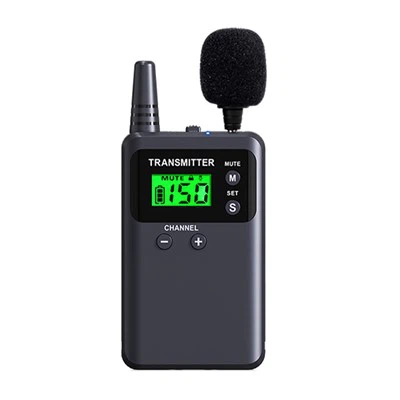
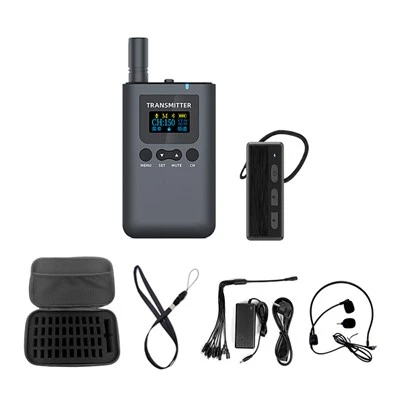
One of the most common backup options we integrate is a redundant transmitter setup, which is simpler than it sounds. The core transmitter for a one-way system sends audio via radio frequencies, and in high-traffic areas (like a popular mountain overlook or a historic district with hundreds of visitors), using a single transmitter can lead to signal drops or interference from other electronic devices. We always advise scenic spots to pair their main transmitter with a backup unit that's pre-programmed with the same audio content. If the main transmitter fails for any reason-say, a battery dies or a hardware glitch cuts the signal-the backup can be swapped in in under two minutes. For spots that host large daily crowds, we often recommend a long-lasting transmitter that supports both units, so the backup is charged and ready to go at all times. You can check out our Long-Lasting One-way Tour Guide System page to see how these transmitters are built to hold a charge for days, so you never have to worry about a dead backup when you need it.
Another critical backup component is the receivers themselves. Most one-way tour guide devices are designed to be durable, but even the sturdiest receiver can malfunction, get dropped, or run out of battery mid-visit. That's why we always include spare receivers as part of our recommended backup plan, especially for spots that rent receivers to visitors. For example, a popular historic castle might have 500 receivers in circulation on a busy weekend, and if 10 or 15 stop working, that's enough to create frustrated groups. Our One-way Tour Guide Device receivers are built with replaceable, easy-to-change batteries, so adding spare batteries to your backup stock is a low-cost, high-impact step. We also offer portable backup receiver chargers for spots that don't have access to power outlets at every stop-these compact chargers can top up 20 receivers at a time, so if a batch of rental units dies mid-day, you can get them running again in minutes.
For scenic spots that also host events like guided exhibitions or special tours, we've found that cross-functional backups work well too. Our One-way Tour Guide System for Exhibitions is designed to be compatible with our scenic spot system, so if an exhibition within the larger spot is overcrowded and its dedicated transmitter cuts out, you can temporarily switch the scenic spot's backup transmitter to cover the exhibition. This flexibility is a big plus for smaller scenic spots that might not have the budget for separate systems, but it's worth noting that even the most compatible backup requires careful planning. We work with each spot to map out their busiest areas, so we can tailor the backup system to their specific needs-for example, a coastal spot might need waterproof backup transmitters that can handle salt spray and sudden rain, while a mountain spot might need units that work at high altitudes without signal drops.
Power outages are one of the most overlooked failure points for these systems, especially in scenic spots that rely on solar power or temporary generator setups. A lot of venues assume their main transmitter will run on grid power, but if the generator goes out during a busy weekend event, the entire communication system stops. That's why all our one-way systems come with built-in backup power options: both transmitters and receivers have a rechargeable battery that can run the device for 12+ hours on a single charge, and we offer portable solar chargers as an additional backup. For example, a vineyard tour that winds through outdoor rows and doesn't have constant power access can use these solar chargers to keep backup transmitters ready, even if there's no grid power available for the entire day. We've seen this solve so many issues-last year, a national park in the Rockies had a generator failure during a holiday weekend, but their backup transmitters had enough battery power to keep all visitor groups informed, and the park didn't have to cancel any guided tours.
Another backup option that's often misunderstood is offline audio content storage. A lot of people assume one-way systems rely on cellular data, but that's not true-most transmitters store audio content locally, so they don't need internet to send signals. But what if the audio file on the main transmitter gets corrupted? That's where a local backup of all audio content comes in. We recommend saving all tour audio files to a portable drive that's kept on-site, so if the main transmitter's storage fails, you can quickly upload the files to the backup transmitter without needing an internet connection. This is especially important for scenic spots that update their tour content regularly-if you're adding new audio for a seasonal exhibit, having a offline backup ensures you don't lose that content if a device glitch hits.
It's also worth mentioning that for smaller scenic spots, backups don't have to be overly expensive. We often work with budget-conscious venues to create tiered backup plans: a basic plan includes spare receivers and backup batteries, a mid-tier plan adds a secondary transmitter, and a premium plan adds redundant power and cross-system compatibility for exhibitions or events. A small town historic district that sees a few hundred visitors a day might only need the basic plan, while a large national park with thousands of daily visitors needs the full premium setup. The key is to match the backup options to the spot's actual usage and environment-there's no one-size-fits-all, but a good supplier will help you figure that out.
Over the years, I've heard from scenic spots that tried to skip backups to save money, and almost all of them came back to us after a disaster: a transmitter died mid-tour, leaving a group lost and uneducated; a batch of rental receivers died at the peak of a holiday weekend, leading to negative reviews online; a power outage in the middle of a historic district forced visitors to wander around without guidance. These are avoidable issues, and backups are the solution. The one-way tour guide system is already a game-changer for scenic spots, making tours more accessible and engaging for visitors, but backups turn that good system into a reliable one that works for everyone.
If you're a scenic spot looking to upgrade your one-way tour guide system or build a new one with backups in mind, we'd be happy to walk you through your options. Our team has worked with dozens of spots across different types-from coastal parks to mountain historic districts-to create backup plans that fit their needs and budget. To learn more about our core system, check out our One-way Tour Guide System for Scenic Spots page, and if you're curious about our durable, portable units, take a look at Portable One-way Tour Guide System for smaller or temporary spots. We believe that no scenic spot should have to worry about their communication system failing when visitors are counting on them, and backups are the first step to making that happen.
References
- Scenic Spot Communication Technology Report 2023, Global Tourism Tech Association
- Field Testing of Wireless Tour Guide Systems in Outdoor Environments, Journal of Tourism and Hospitality Technology, 2022
- Backup Power Solutions for Outdoor Audio Systems, Outdoor Tech Standards Board, 2021
- Visitor Experience Metrics for Guided Tours, International Association of Amusement Parks and Attractions, 2023