


Many venues bought a large tour guide system kit a few years ago and are now finding it doesn't fit how they work.
The problem usually isn't a shortage of receivers. It's that visitors now arrive in smaller groups, and several of those groups are on the tour at the same time. A kit sized around one big daily group can leave a venue stretched when four small groups start within the same hour.
This article looks at how that shift changes tour guide kit configuration, and how to size equipment around it.
From One Big Group to Several Small Ones
The traditional picture was a coach party: forty or fifty people, one guide, one departure.
That picture still exists, but more venues now describe a different pattern. School trips, private tours, VIP receptions, and small independent groups all run on their own schedules. Each group is smaller, but there are more of them overlapping.
This is a directional observation drawn from how venues describe their operations, not a measured statistic. Your own booking data is the better guide, and it's worth checking before you buy.

Why Receiver Count Is No Longer the Main Number
When a venue ran one large group at a time, total receivers was the number that mattered. Buy enough for the biggest group and the job was done.
With several small groups running in parallel, three other numbers matter just as much.
Transmitters. Each guide needs one, so the number of simultaneous groups sets the number of transmitters you need.
Channels. Every parallel group needs its own clean channel, or neighboring groups start to hear each other.
Charging capacity. Small groups turn over faster, so receivers cycle back to the dock more often during the day.
A kit with plenty of receivers but a single transmitter can look generous on paper and still fail at 11 a.m. on a busy Saturday.

How Preset Kit Tiers Map to Small Groups
Most manufacturers sell kits in preset tiers, and the lower tiers are where this trend shows up.
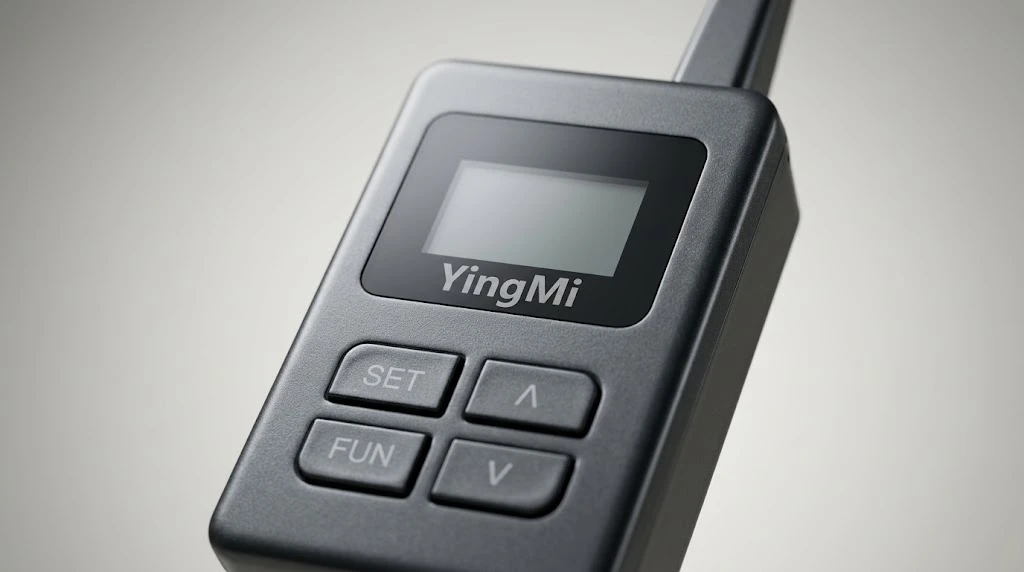
The YingMi B7-1 tour guide system starts with a 30-person kit of 1 transmitter, 30 receivers, and 2 charging docks. It then steps up through 60-, 100-, and 200-person configurations, to a 500-person kit with 5 transmitters and 10 charging units.
The A8 offers six preset tiers, from a 20-person entry kit with 1 transmitter and 20 receivers up to a 500-person kit with 5 transmitters, 500 receivers, and 10 charging units. The E8 follows a similar range, scaling from a 20-person set to a 500-person kit with multiple transmitters.
Two things are worth noticing here.
Entry tiers of 20 to 30 people suit the small-group pattern directly. A venue can add a second or third small kit as demand grows, instead of buying one oversized set.
The largest kits include several transmitters. That gives a high-volume venue room to run more than one guide at once, which a single-transmitter kit can't do however many receivers it holds.
Common Configuration Mistakes
A few errors come up repeatedly when venues size equipment.
Buying by total visitors. A venue that sees 500 visitors a day doesn't need 500 receivers if they arrive in groups of 15 across eight hours. What matters is how many are out at once.
Planning for the average day. Equipment sized for average demand runs short on holidays and peak weekends, which is exactly when a shortage costs the most.
Counting receivers but not charging slots. If groups turn over quickly, receivers need to be recharged and ready between tours. Too few charging docks creates a bottleneck.
Ignoring channel planning. More simultaneous groups means more channels in use. Check the channel count against your realistic peak, not just your typical day.
A Simple Sizing Check
Before choosing a kit, write down four numbers.
The largest single group you expect to host. The highest number of groups running at the same time. How long a typical tour lasts. Whether there's a gap between tours long enough to recharge.
Then compare them with the kit tiers. Most venues find that one or two of these numbers decide the choice, and it's rarely the total visitor count.
Planning for Growth
Group patterns change, so it helps to leave room to expand.
Starting with a mid-sized kit and adding a second later is often easier than replacing an oversized one. Ask the supplier whether additional kits can operate alongside existing ones on separate channels, and whether the new units will be compatible with what you already own.
If you're sourcing in volume, YingMi also offers OEM and ODM services, including custom kit configurations and branding, so the transmitter, receiver, and charging mix can be arranged around your operation.
FAQs
Q: How do I know what size tour guide kit I need?
A: Start from your peak day, not your average. Note the largest group you host and the most groups that run at the same time, then match those to the preset kit tiers. Total daily visitors on its own is a poor guide.
Q: Is it better to buy one large kit or several small ones?
A: It depends on your pattern. If groups run in parallel, several smaller kits, or a larger kit with multiple transmitters, usually fit better than one big single-transmitter set. A single large group a day is the case where one large kit makes sense.
Q: Do more transmitters mean more interference?
A: Not by itself. Interference depends on how many separate groups are operating nearby and how many channels are available. A system with enough adjustable channels can keep parallel groups separate when each is assigned its own channel.
Q: Can I add more equipment to my kit later?
A: Often yes, but confirm with the supplier first. Ask whether new units can run alongside your existing ones, and whether they share the same frequency band and channel settings.


