


This guide sets out a practical operating routine for venues that use tour guide systems every day, such as museums, heritage sites, factories, visitor centers, and travel operators.
The Daily Receiver Lifecycle
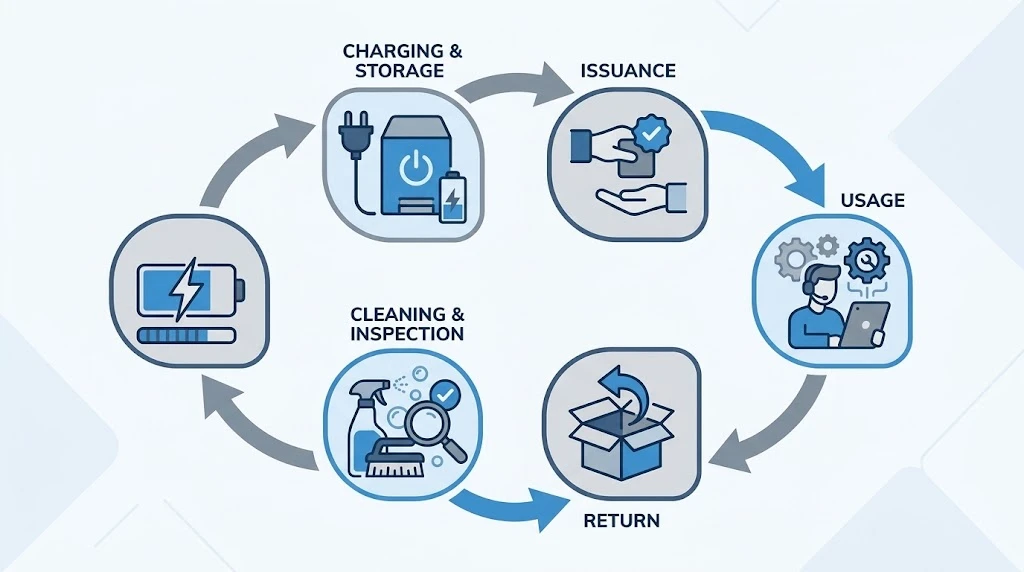
Every receiver goes through the same loop each day. Designing the process around that loop makes problems easy to spot.
Charged and stored. The unit waits in a charging case or dock, ready for use.
Issued. A staff member or guide hands it out, and the number issued is recorded.
In use. The visitor wears it for the length of the tour.
Returned. The unit comes back at the end of the visit, and the count is checked against the number issued.
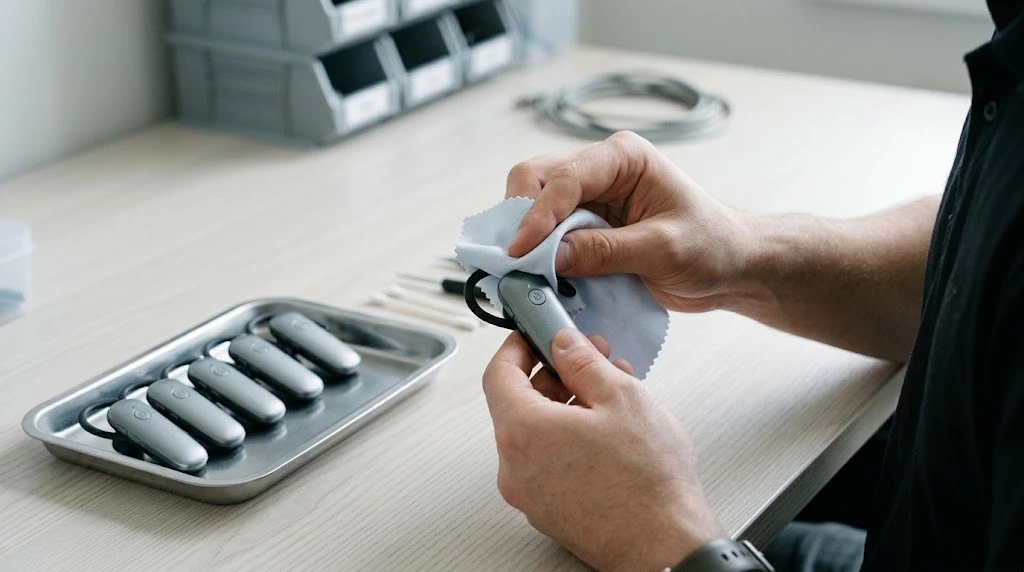
Cleaned and inspected. Earphones are cleaned, and the unit is checked for damage.
Back on charge. The unit returns to the dock, and the cycle begins again.
A gap at any stage shows up as a late tour, a flat battery, a missing unit, or a complaint. Each section below addresses one stage.
Charging
Match the charging setup to the number of units
Charging all units at once is easier to manage than charging them in small batches. A multi-unit charging case or dock removes the need to plug in each receiver separately and makes it obvious at a glance which units are charging.
Plan around your busiest day
Calculate how many receivers are needed during peak hours, and compare that with how many are available at the same moment after allowing for units that are recharging. If the two numbers are close, the fleet is too small for the schedule.
Keep a simple charging rule
A clear rule prevents arguments and mistakes, for example: every unit goes back on charge as soon as it is cleaned, and no unit leaves the charging area without a visible indicator showing a full charge. Check the supplier's documentation for the correct way to read the indicators on your equipment.
Do not leave batteries to chance
Keep a record of any receiver that repeatedly runs out early. Units whose battery performance has dropped should be flagged and serviced or replaced according to the supplier's guidance.
Cleaning and Hygiene
Earphones are worn close to the ear and shared between many visitors, so cleaning is part of the visitor experience.
Follow the manufacturer's instructions. Cleaning agents and methods vary by material, so use only what the supplier recommends for each part.
Choose earphones with cleaning in mind. Replaceable ear covers, wipeable surfaces, and individually packaged accessories simplify the process.
Clean after every use. Make it part of the return step, not a separate task done later.
Keep clean and used units apart. Use separate trays or marked areas, so no one mistakes a used unit for a ready one.
Keep spare parts on hand. Replacement ear covers and spare earphones allow staff to swap rather than wait.
Storage and Handling
Use a case or dock designed for the equipment
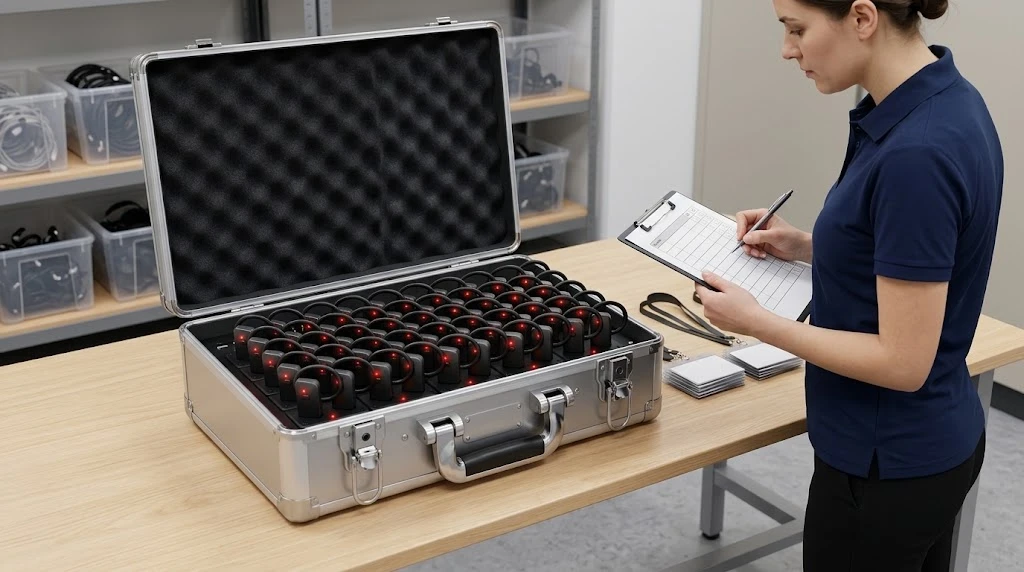
A dedicated case protects receivers from knocks, keeps them organized, and gives each unit a defined position, which makes a missing unit immediately visible.
Store in a suitable place
Keep equipment in a clean, dry, and ordinary room-temperature area, away from direct sunlight and moisture, and follow any storage guidance given by the supplier.
Handle with care
Brief staff and guides on how to hold, wear, and disconnect the equipment. Many faults come from forced connectors, dropped units, or pulled cables.
Plan for travel
Operators who take equipment off-site need a case that closes securely, a packing list, and a routine for counting all items before leaving and after returning.
Loss and Damage Control
Missing receivers are a common hidden cost. A few habits keep losses low without making the visit unpleasant for guests.
|
Measure |
Purpose |
|---|---|
|
Count out and count in |
Every issued unit is accounted for at the end of each tour |
|
Numbered units |
Each receiver can be traced to a group, a guide, or a time slot |
|
Return point at the exit |
Visitors return the equipment before leaving, with a clear reminder |
|
Group leader responsibility |
For organized groups, one named person collects and returns the units |
|
Deposit or ID policy |
Used only where appropriate, and explained clearly in advance |
|
Incident log |
Damage and loss are recorded with date, group, and cause |
Review the log regularly. A pattern, such as a particular entrance, guide, or time of day, usually points to a simple fix.
Roles and Responsibilities
Even a small operation benefits from naming who does what.
Equipment lead: owns the fleet, the charging routine, and the incident log.
Guides: check their transmitter and the receivers for their group before and after the tour.
Front desk or reception: hand out and collect units, and answer visitor questions about the equipment.
Manager: reviews faults, losses, and fleet size against actual demand each month.
When no single person owns the equipment, small problems accumulate until they affect the visitors.
A Weekly and Monthly Check Routine
Weekly
Count all receivers, transmitters, and accessories against the inventory list.
Test a sample of units for audio quality and charging.
Replace worn ear covers, damaged cables, and cases with broken latches.
Clear the incident log and plan any repairs.
Monthly
Compare actual usage with fleet size to decide whether to add or reduce units.
Review battery performance and flag units that need service.
Check supplier documentation or support channels for firmware, software, or guidance updates relevant to your equipment.
Update staff briefing materials if procedures have changed.
FAQs
Q: How Many Spare Receivers Should I Keep?
A: A common approach is to keep a margin above the largest expected group, so that units that are charging, being cleaned, or out for repair do not leave you short. The right margin depends on how quickly your process turns units around.
Q: How Often Should Receivers Be Cleaned?
A: After each use, particularly the earphones and any surfaces that touch the ear or skin. Use the cleaning methods recommended by the supplier.
Q: What Is The Best Way To Prevent Receivers From Being Taken Away?
A: A clear return point at the exit, a count at the end of every tour, and a named group leader for organized groups work better than strict rules alone. Numbered units make follow-up easier when something goes missing.
Q: Should Receivers Be Charged Every Night?
A: That depends on the equipment and your schedule. Follow the supplier's recommended charging practice, and make sure units are fully charged before the first tour of the day.
Q: When Should A Receiver Be Retired Or Replaced?
A: When it repeatedly fails to hold charge, shows persistent audio faults, or has physical damage that affects safety or hygiene. Use the supplier's service guidance to decide between repair and replacement.
Q: Do I Need Software To Manage A Fleet?
A: Small fleets can be managed with a simple inventory sheet and incident log. Larger operations may benefit from a more structured tracking system, but a clear routine is more important than any tool.
Keeping the System Ready Every Day
A tour guide system delivers value only when the equipment is ready and the process behind it is dependable. Define the lifecycle, assign clear responsibilities, keep charging, cleaning, and storage simple, and track losses and faults so you can fix patterns instead of individual incidents. Confirm equipment-specific details such as battery care, cleaning materials, and storage conditions against the supplier's official documentation, and adjust the routine as your volumes grow.


