

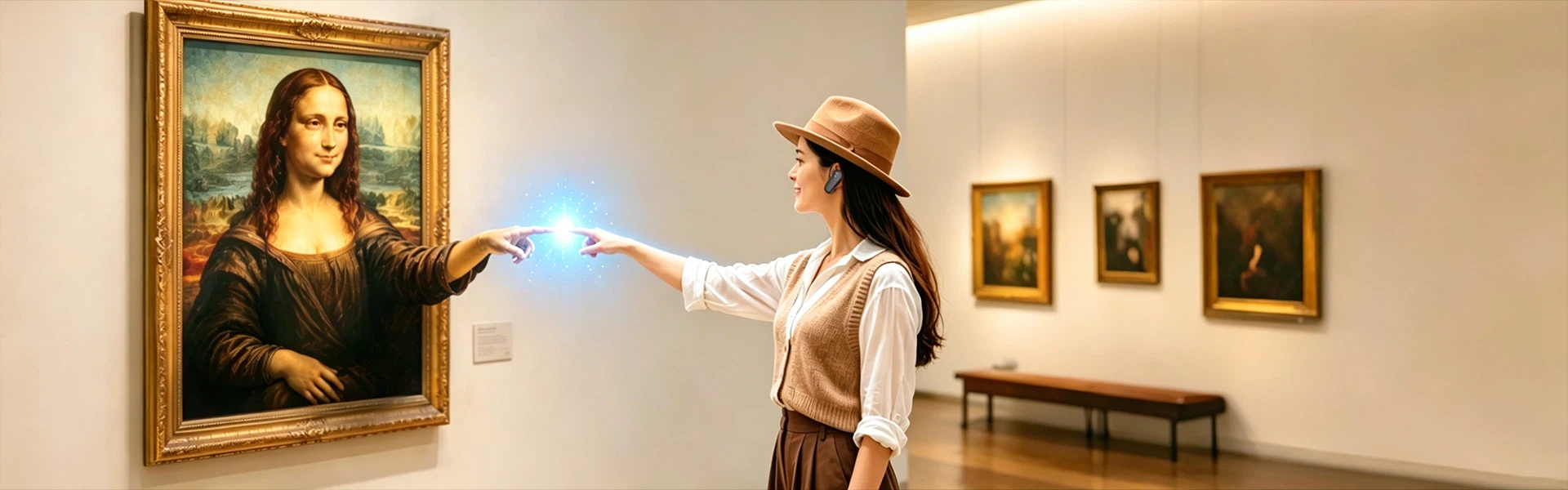
Walk into any major museum, heritage site, or corporate facility today and the experience of being guided has changed considerably. The clunky, handheld receivers of a decade ago - heavy, plasticky, confusing - have largely given way to a new generation of tour guide devices engineered around the person holding them. Ergonomic design has moved from a secondary consideration to a primary one, and the results are visible in how comfortably visitors engage with guided content.
This shift matters because tour guide devices are, by definition, held and heard for extended periods. A visitor at a natural history museum might spend two to three hours with a device in hand. A factory delegation following a corporate host through a production floor could wear a receiver for the better part of a day. When hardware fatigues the hand, strains the ear, or demands constant attention to operate, it competes with the very experience it's meant to enhance. Ergonomic design resolves that competition by getting out of the way.
The case for physical comfort
Weight is the most immediate ergonomic variable. Modern wireless tour guide receivers have shed considerable mass compared to earlier hardware generations - a reduction accomplished through more compact PCB layouts, lighter housing materials, and miniaturized battery cells that maintain respectable run times without bulk. A device that feels natural after an hour of carrying it is one that visitors stop noticing, which is precisely the goal.
Form factor follows closely. The best current devices adopt a shape that rests naturally in a partially closed palm - neither so narrow that fingers cramp around it, nor so wide that the hand must stretch. Rounded edge profiles prevent pressure points during extended use, and textured grip zones maintain a secure hold without requiring active effort. These are small details that accrue into a dramatically different experience over time.
100+
Simultaneous listeners supported by multi-channel wireless systems without signal degradation
19+
Years of specialist manufacturing experience behind leading audio guide hardware designs
30k㎡
Production facility capacity at major tour guide system manufacturers, enabling consistent quality at scale
24h
Average technical support response time offered by specialized tour guide system providers
Controls designed for all users
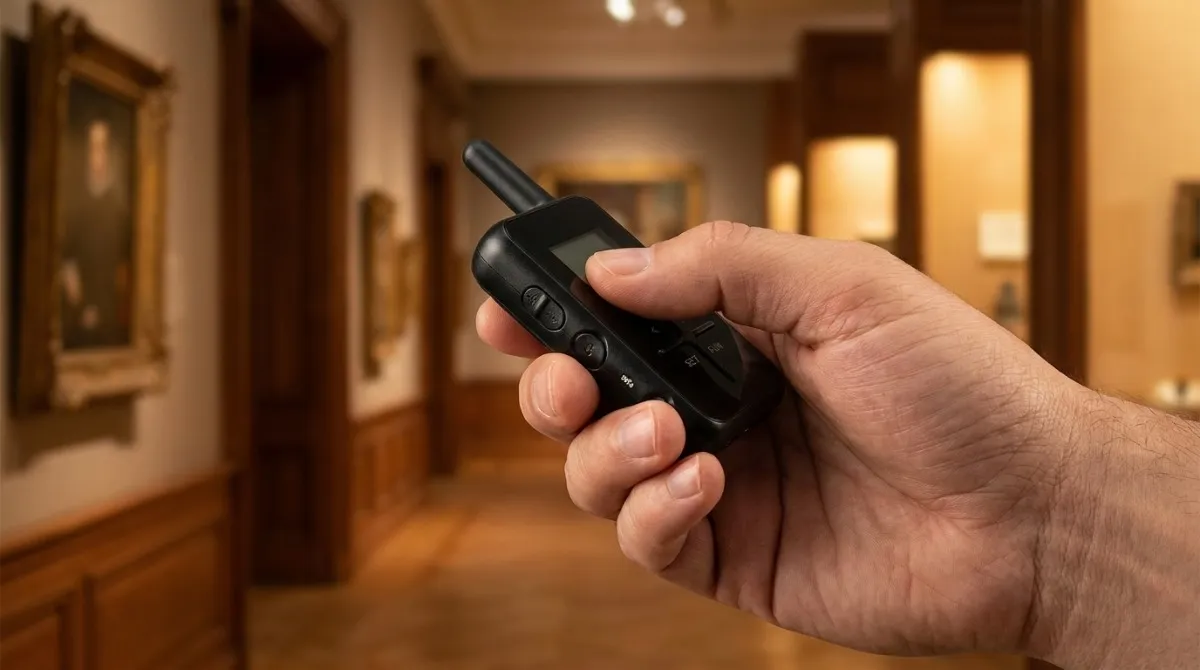
Ergonomics extends well beyond the physical housing. How a device is operated - the placement of buttons, the tactile feedback of volume controls, the intuitiveness of channel selection - determines how much cognitive load a visitor must dedicate to the device rather than the tour content.
Leading wireless tour guide systems now position their primary controls within thumb reach of a natural grip, so visitors can adjust volume or skip content without repositioning their hand or looking away from an exhibit. Volume wheels offer detented increments that register by feel. Power buttons are recessed slightly to prevent accidental activation, while pairing controls are streamlined enough that even first-time users can connect without consulting instructions.
"The best tour guide hardware is the kind visitors forget they're holding - because it fits so naturally, operates so intuitively, and delivers audio so cleanly that attention stays where it belongs: on the experience."
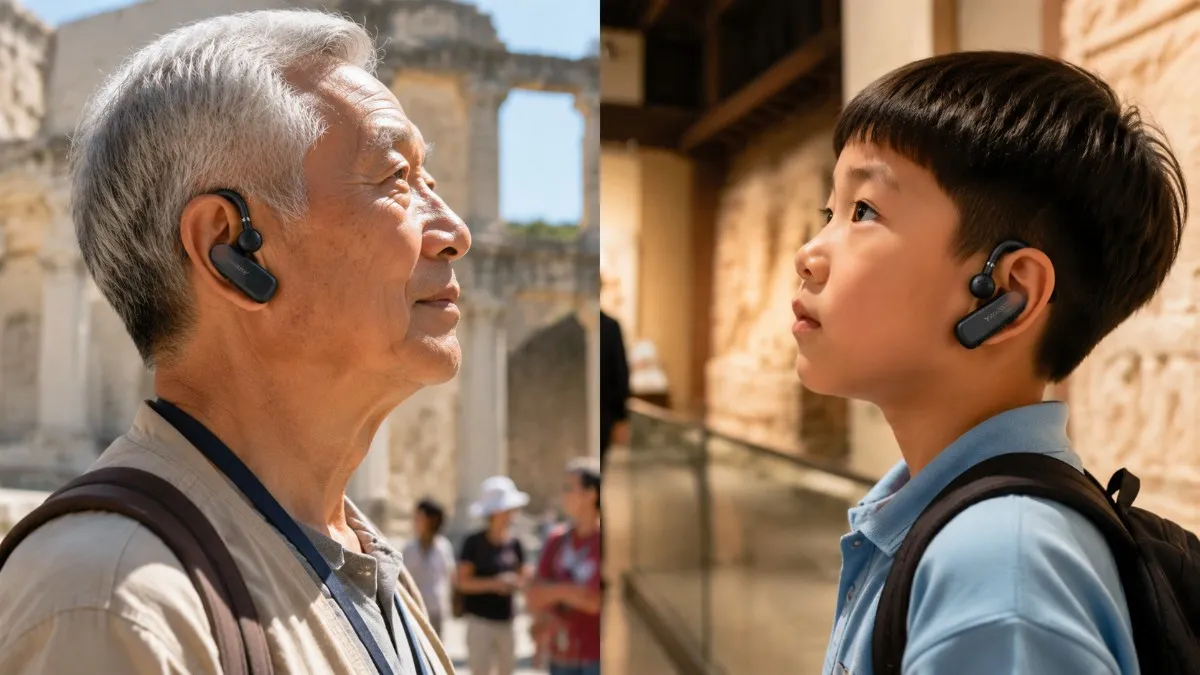
This approach matters especially for venues that serve diverse visitor demographics. An elderly visitor with reduced grip strength or some arthritis, a child whose hands are smaller than an adult's, a non-native speaker unfamiliar with device conventions - each benefits when controls require minimal learning and minimal physical effort. One-way tour guide systems designed for simplicity often feature a single primary function that listeners need to manage, reducing the interface to its irreducible essentials.
Acoustics and the listening experience
Physical ergonomics and acoustic ergonomics go hand in hand. A device that sits comfortably in the hand still fails if the audio experience itself is uncomfortable - if a visitor must press an earpiece uncomfortably hard to hear in a noisy gallery, or if the speaker output demands a volume that bleeds into surrounding spaces.
Modern tour guide systems address this through improved driver components and anti-interference wireless protocols. Clearer signal transmission means visitors hear guides at lower, more comfortable volumes. Noise suppression on the transmitter side reduces the listening effort required in ambient environments. Over the arc of a multi-hour visit, that reduction in strain is meaningful. Visitors leave less fatigued, having processed more of the content they came for.
Key ergonomic features worth evaluating
Long-range wireless stability
Effective ergonomic design includes signal reliability - visitors should never have to reposition themselves or stand still to keep audio clear. Long-distance transmission systems maintain stable connection through walls and crowds.
Battery life proportional to use case
Devices that run out mid-tour break the experience. Ergonomic hardware accounts for realistic usage durations - full-day factory tours require significantly more capacity than a 90-minute museum visit.
Multi-channel flexibility
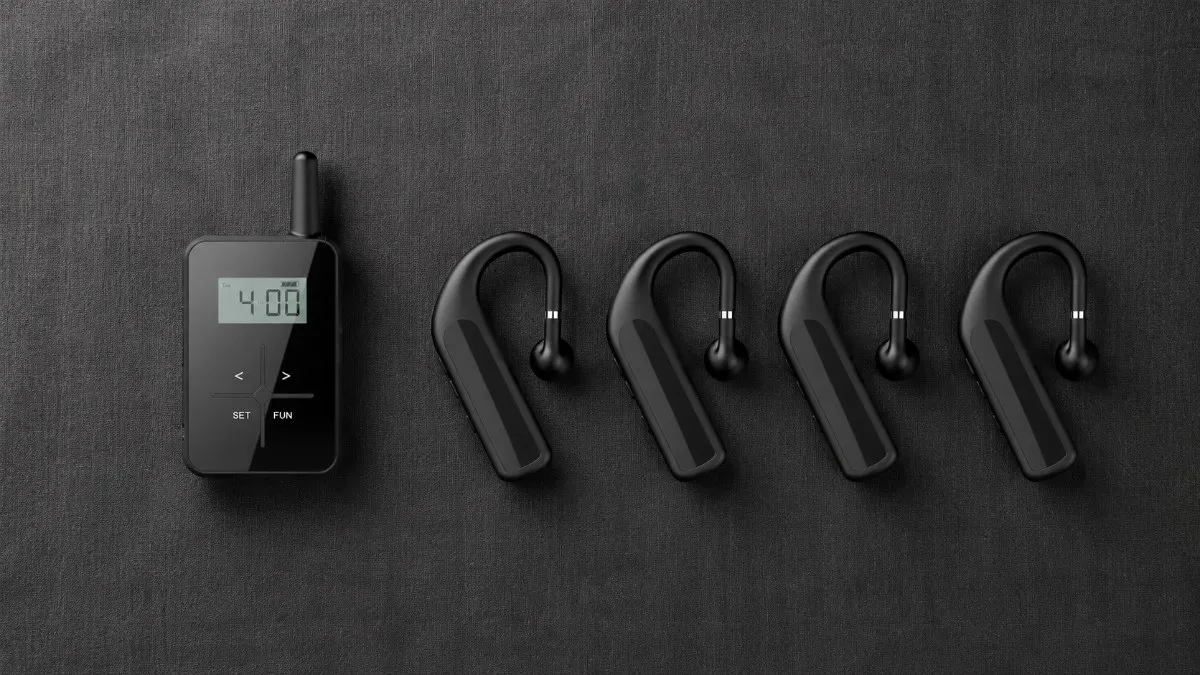
Multichannel tour guide systems allow simultaneous groups to operate independently in the same venue - removing the acoustic crowding that forces visitors to strain for their specific guide's voice.
Ergonomics as a procurement criterion
For venue managers and event organizers evaluating tour guide systems, ergonomic quality deserves weight alongside transmission range and channel count. A device that technically covers the space but fatigues visitors in the first hour has failed at its core function.
Practical evaluation should include hands-on trials with representative user groups, particularly those at the extremes of the age and ability range the venue serves. Testing should extend to realistic durations - thirty minutes of assessment won't reveal the pressure points that emerge after two hours. Staff who handle charging, distribution, and collection workflows should also weigh in, since operationally awkward devices create friction that reduces overall system effectiveness.
Procurement note: When requesting samples from manufacturers, ask specifically about housing material composition, grip zone texture, button actuation force, and earpiece options. Reputable suppliers with OEM/ODM capabilities - such as those holding CE, FCC, and RoHS certifications - will have clear answers and may offer customization to better fit your visitor demographic.
The direction of travel
Ergonomic improvement in tour guide devices is not a finished project. As component miniaturization continues and wireless protocols improve, the hardware will shrink further while battery performance holds or improves.
What remains constant across all these developments is the underlying principle: the device serves the experience, not the other way around. Every ergonomic refinement - from the curve of a housing to the threshold of a volume knob - is an attempt to make that service more complete and less visible. When it works, visitors leave knowing what they learned and felt, not how they spent an afternoon wrestling with hardware.


