


Picture a factory visit with buyers from three countries. The host speaks one language, and for most of the group that language is a guess. People nod politely, check their phones, and leave with half the story.
A Yingmi AI translator solves that by putting the translation into each listener's ear while the speaker is still talking. Nobody waits for a pause, and nobody has to share a loudspeaker. Below is how it works, using the YingMi J-X8 as the example.
What a wireless simultaneous interpretation system is
A wireless simultaneous interpretation system delivers translated speech to listeners' headsets in real time, as the speaker talks.
That separates it from consecutive interpretation, where the speaker stops every few sentences so the interpreter can catch up. It also separates it from the booth-and-console setup used at large conferences. A portable system gives you the same experience in a meeting room, a showroom or a production hall, where a booth would not fit.

Two pieces of hardware do most of the work
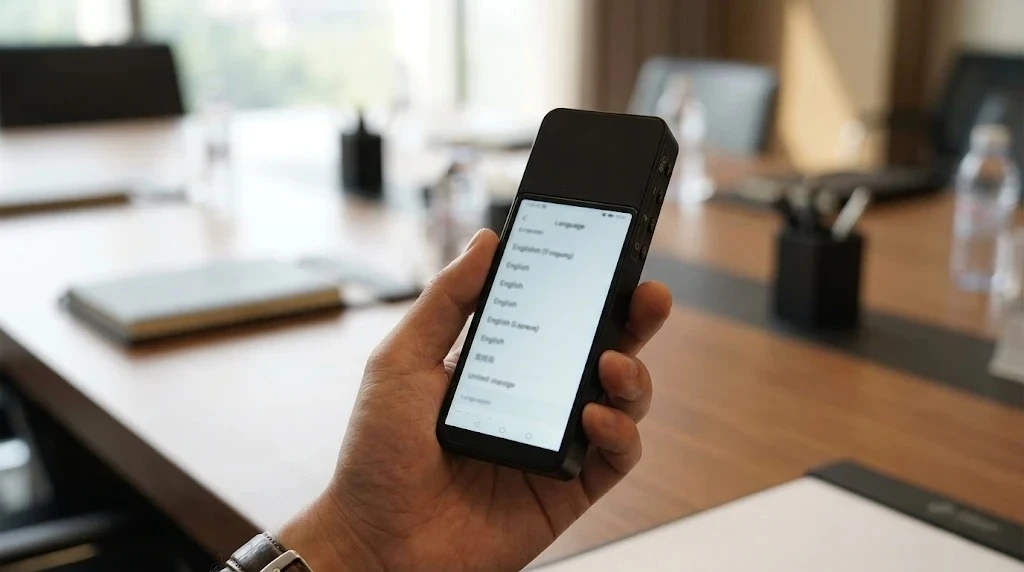
The first is the host. On the J-X8 it is a 400 g unit with a 6.3-inch screen, and that screen is where you set up the translation before the event starts. It is light enough to carry from room to room.
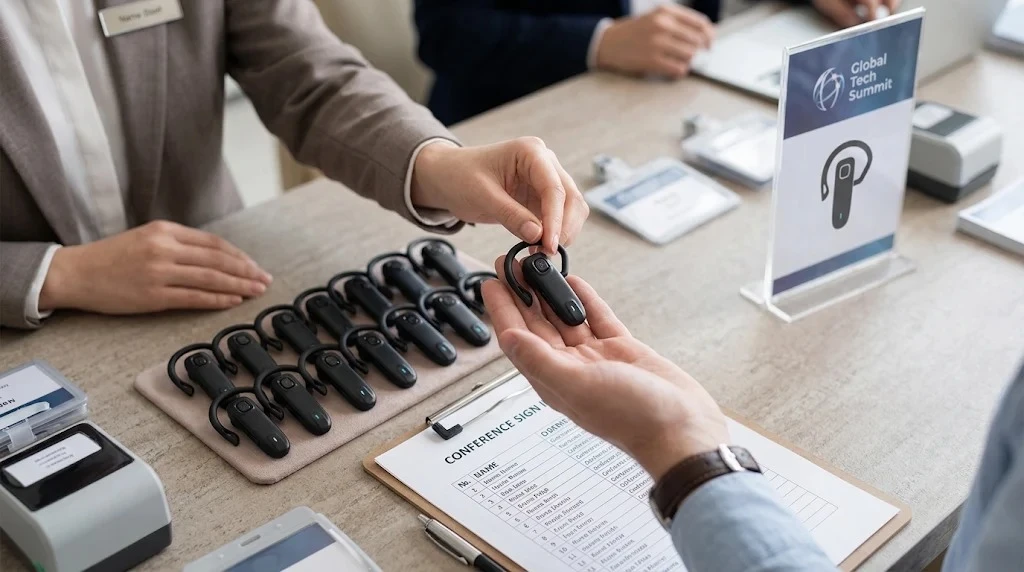
The second is the headsets. Each one weighs 13 g, which matters more than it sounds: guests wear them for an hour or more, and weight is the first thing people complain about. Both the host and the headsets are rated at about 15 hours.
AI or a human interpreter?
The J-X8 works with both, and it supports more than 70 languages.
For a routine meeting, a supplier visit or a factory tour, AI translation is usually enough, and it saves you from booking an interpreter for every language. For a contract negotiation, where a single word can change the deal, a human interpreter is the safer option.
The advantage of having both on one system is that the equipment doesn't change when the event does.
What a session looks like
Before guests arrive, someone sets up the translation on the host. At the door, each guest takes a headset and puts it on. From then on, everyone hears the speaker in their own language through their own headset, even when they stand in different parts of the room. When the event ends, the headsets go back into the charging case, which also charges them.
That is the whole routine, and it is short enough that a receptionist can run it.
How many headsets can one host handle?
There is no fixed limit on the number of headsets per host. The quantity depends on the configuration you choose, so size it to the largest event you expect to run, not the average one.
The charging cases hold 30 or 50 headsets, so it is easier to order in those multiples than to end up with a half-empty case.
A portable system does have limits. For a multi-day congress with many languages running at once, professional booths and a full interpreter team still make sense. The J-X8 is aimed at business meetings, trade show reception, factory visits and conferences of a more modest size.
FAQs
Q: What is the difference between simultaneous and consecutive interpretation?
A: In simultaneous interpretation, the translation arrives while the speaker keeps talking. In consecutive interpretation, the speaker pauses so the interpreter can translate. Simultaneous is faster, which matters in long meetings.
Q: Can the J-X8 be used with human interpreters?
A: Yes. It supports both AI translation and human interpretation, so you can choose for each event.
Q: How many languages does it support?
A: More than 70.


