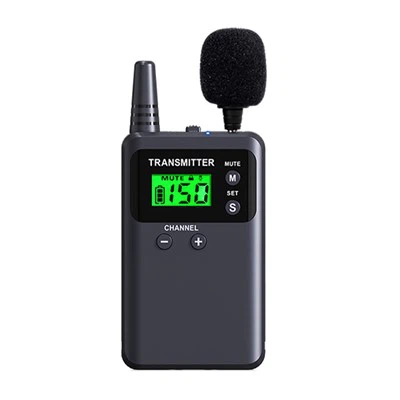
As a supplier of UHF Tour Guide Systems for Exhibitions, I often get asked about the frequency band of these systems. So, I thought I'd write this blog to clear things up and give you a better understanding of what's going on with UHF in the world of exhibition tour guides.


First off, let's talk about what UHF actually is. UHF stands for Ultra High Frequency. It's a range of radio frequencies in the electromagnetic spectrum. The UHF band typically spans from 300 MHz (megahertz) to 3 GHz (gigahertz). But for UHF tour guide systems used in exhibitions, the frequency band usually falls within a more specific range, around 400 - 900 MHz.
Now, you might be wondering why this particular frequency band is used for exhibition tour guide systems. Well, there are a few good reasons for that.
Advantages of the UHF Frequency Band for Exhibition Tour Guide Systems
1. Good Signal Propagation
One of the main advantages of the UHF frequency band is its ability to propagate well in indoor environments, which is where most exhibitions take place. UHF signals can penetrate through walls and other obstacles better than higher frequency signals like those in the 2.4G band. This means that visitors can move around freely within the exhibition hall and still receive a clear signal from the tour guide system.
For example, if you have a large exhibition hall with multiple rooms and partitions, a UHF tour guide system can ensure that the audio is transmitted smoothly to all the receivers, no matter where the visitors are located. This is crucial for providing a seamless and enjoyable tour experience.
2. Low Interference
Another benefit of using the UHF frequency band is that it generally experiences less interference compared to other frequency bands. In an exhibition setting, there are often a lot of electronic devices operating, such as Wi-Fi routers, smartphones, and other wireless equipment. These devices can cause interference in the 2.4G band, which is commonly used for other wireless applications like 2.4G Tour Guide System and 2.4G Tour Guide System for Conferences.
The UHF band, on the other hand, is less congested and less likely to be affected by these sources of interference. This results in a cleaner and more reliable audio transmission, which is essential for a tour guide system where clear communication is vital.
3. Longer Range
UHF signals can travel longer distances compared to signals in higher frequency bands. This is especially useful in large exhibition spaces where the guide may need to move around a lot and still be able to transmit the audio to all the visitors. With a UHF tour guide system, you can cover a larger area without having to worry about the signal dropping or getting weak.
How Our UHF Tour Guide System for Exhibitions Works
Our UHF tour guide system for exhibitions consists of a transmitter and multiple receivers. The tour guide wears the transmitter, which converts their voice into an audio signal and broadcasts it on a specific UHF frequency. The visitors then carry the receivers, which are tuned to the same frequency as the transmitter. When the receivers pick up the signal, they convert it back into audio and play it through the earpieces.
We've designed our system to be easy to use and reliable. The transmitter and receivers are lightweight and portable, making them convenient for both the guide and the visitors to carry around. They also have long battery lives, so you don't have to worry about them running out of power during the tour.
Comparing UHF with Other Frequency Bands
It's important to note that UHF isn't the only frequency band used for tour guide systems. As I mentioned earlier, the 2.4G band is also popular, especially for 2.4G Tour Guide Device and 2.4G Tour Guide System for Museums. While 2.4G systems have their own advantages, such as higher data transfer rates and the ability to support more advanced features, they also have some drawbacks.
As I've already explained, 2.4G signals are more susceptible to interference and have a shorter range compared to UHF signals. In an exhibition setting, where you need to ensure a reliable and clear audio transmission over a large area, UHF is often the better choice.
Regulations and Licensing
Before using a UHF tour guide system for your exhibition, it's important to be aware of the regulations and licensing requirements in your area. In many countries, using certain frequencies in the UHF band may require a license from the local regulatory authority.
We understand that navigating these regulations can be a hassle, which is why we offer support to our customers in ensuring compliance. Our team can help you obtain the necessary licenses and provide guidance on how to operate the system within the legal framework.
Applications in Different Exhibition Settings
Our UHF tour guide system for exhibitions can be used in a variety of settings. Whether it's a small business exhibition, a large trade show, or a museum exhibition, our system can provide a high-quality audio experience for both the guide and the visitors.
For example, in a museum exhibition, where visitors may want to take their time exploring different exhibits, our system allows them to listen to the audio guide at their own pace. They can move around freely without having to worry about the signal dropping, and can even pause and replay the audio if they need to.
In a trade show setting, our system can be used to provide guided tours of the exhibition booths. This can help exhibitors showcase their products and services more effectively and engage with potential customers.
Conclusion
So, there you have it - a comprehensive look at the frequency band of the UHF tour guide system for exhibitions. I hope this blog has helped you understand why UHF is a great choice for exhibition tour guide systems and how it can benefit your next event.
If you're interested in learning more about our UHF tour guide system for exhibitions or are thinking about purchasing one for your next event, don't hesitate to reach out. We're here to answer any questions you may have and help you find the right solution for your needs. Whether you're a museum curator, an event organizer, or an exhibitor, we're confident that our system will meet your requirements and provide a great experience for your visitors.
References
- "Radio Frequency Basics" - Electronics Notes
- "Wireless Communication Technologies" - IEEE Communications Society