

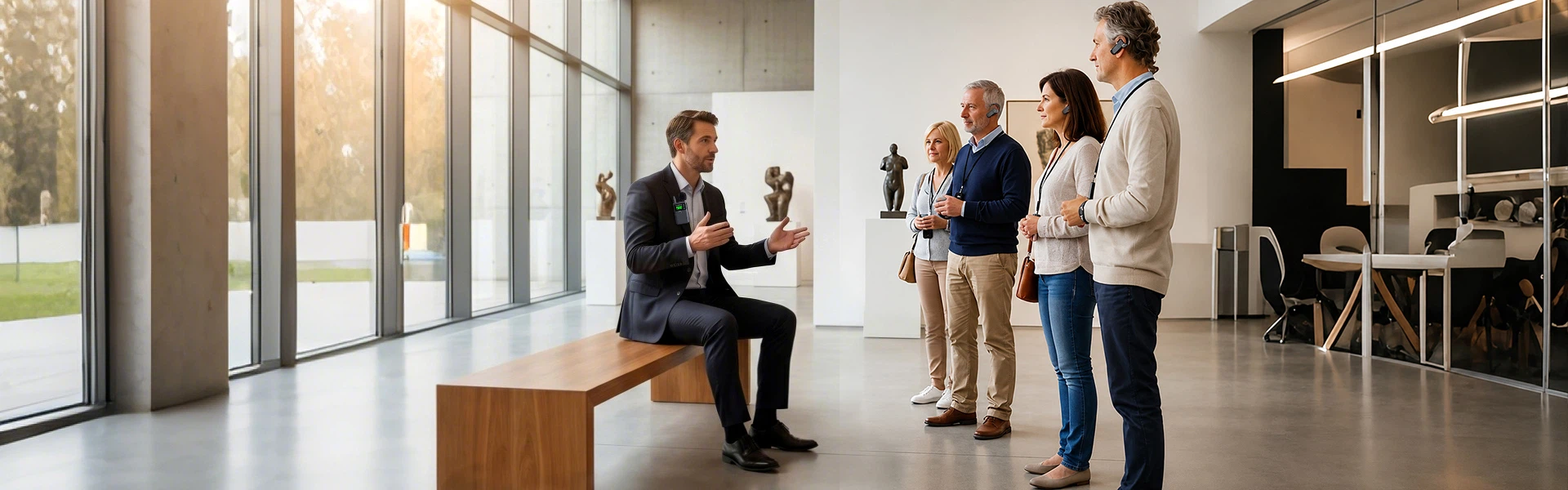
More factories are opening their doors to visitors.
Some do it to build a brand. Some do it for customers and distributors who want to see how products are made. Others have simply become destinations, drawing travelers who like watching things get built. Whatever the reason, the effect on equipment is the same: factory tour guide equipment is moving from an occasional purchase to a regular operating need.
This article looks at why industrial visits are growing, what they ask of guide equipment, and how a plant can plan for it.
Why Factories Are Welcoming Visitors
The motives vary, and they point in different directions
.
Brand building. A visible, well-run production floor tells customers something a brochure can't.
Customer and partner confidence. Buyers and distributors often want to inspect where and how their products are made before placing large orders.
Tourism and education. Industrial heritage sites, craft workshops and food or beverage producers increasingly run tours for the public, and school groups visit to see real manufacturing.
This is a directional observation drawn from how the sector describes itself, not a measured statistic. A plant's own visitor records are the better guide when planning.
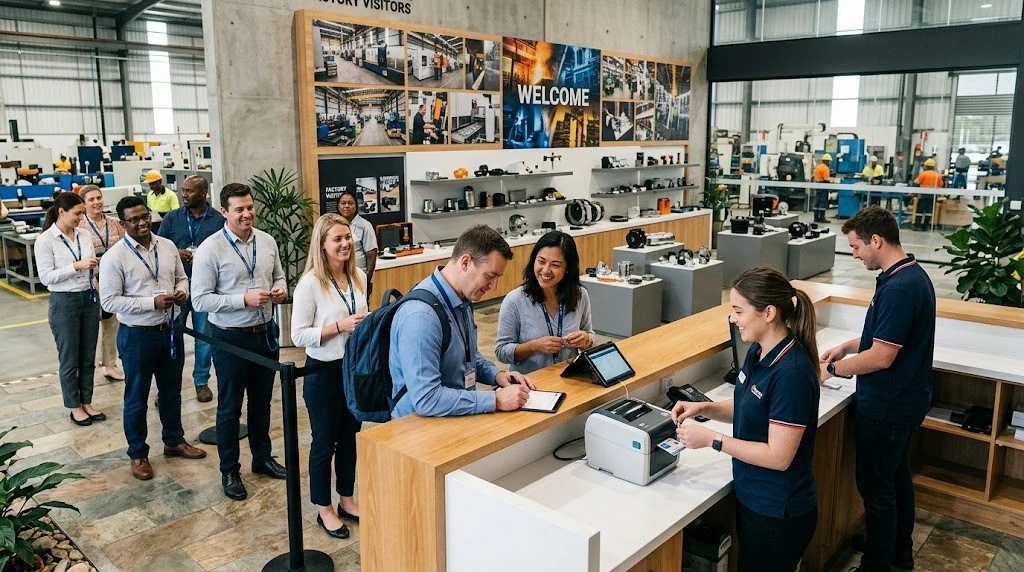
What Changes When Visitors Walk the Floor
A production line was never designed for an audience. Adding one introduces new problems.
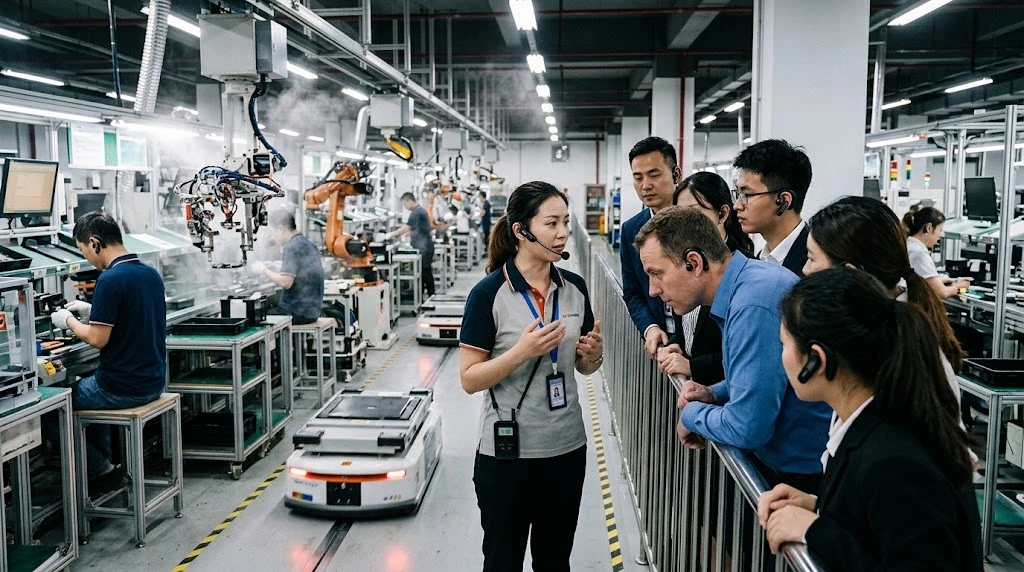
Noise. Machinery competes with the guide's voice. Shouting is tiring for the guide and still leaves the back of the group guessing.
Safety. Visitors must follow set routes and keep clear of equipment. A guide who can speak calmly and be heard by everyone is easier to follow than one straining over the din.
Confidentiality. Many plants have areas where processes, formulas or tooling must not be overheard or recorded.
Cleanliness. Food, electronics and pharmaceutical sites may require visitors to follow hygiene rules, including how shared equipment is handled.
Repeat scheduling. Once tours begin, they tend to run several times a week, so the equipment has to hold up and be easy to manage.
What This Means for Equipment Demand
Taken together, these pressures change what a plant looks for.
A guide system stops being a nice extra and becomes part of how a safe, orderly tour is run. Buyers start to ask about clear speech in noise, stable signal around machinery, easy sanitizing between groups, and enough channels to run more than one tour at once.
Plants also tend to start small and expand. A first purchase might cover one weekly group. As the program grows, the plant adds capacity rather than replacing everything.
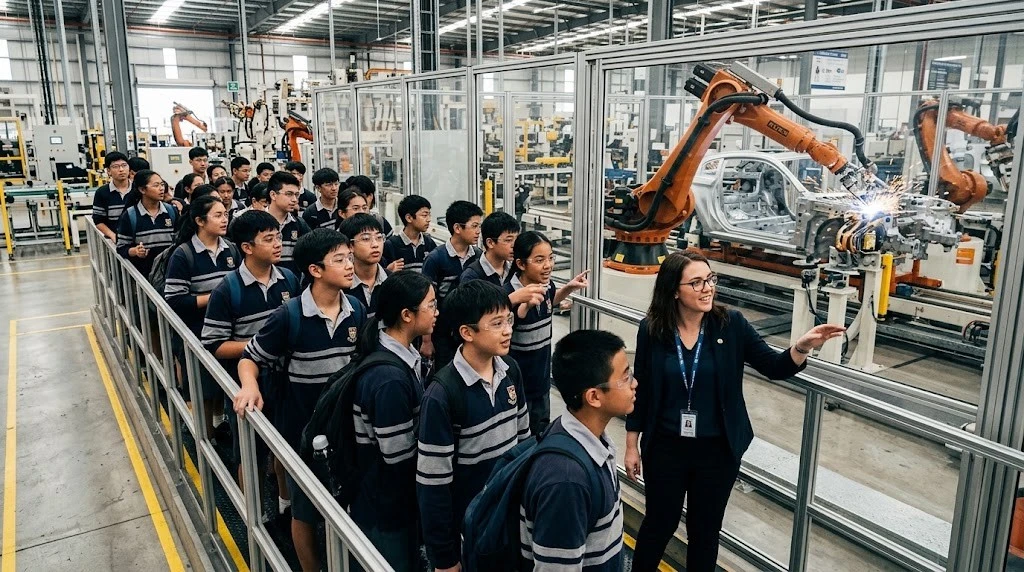
Planning Equipment Around a Factory Tour Program
A few practical steps help a plant size its first purchase sensibly.
Map the route and walk it with a test unit. Check the signal in the noisiest and most obstructed parts, not only the open corridors.
Decide how many groups might run at the same time on busy days. That sets the number of transmitters and channels you need.
Plan the handling routine. Decide who issues the receivers, how they are cleaned, and where they are charged before the next group.
Identify restricted zones. Confirm with the plant's own security team how the equipment may be used near sensitive areas.
One Example Worth Looking At
For plants that need to run tours around machinery and other electronic equipment, the YingMi R8 was built with interference in mind. Its published specifications describe special circuit processing intended to resist external signal interference, with 100 adjustable channels and a stable range of up to 200 meters on the receiver side. You can read more on the R8 anti-interference tour guide system page.
Every plant's layout and noise profile differ, so treat any specification as a starting point and test on your own floor before ordering in volume.
FAQs
Q: Why are more factories offering visitor tours?
A: Reasons vary, but common ones include building brand trust, giving customers and distributors confidence in the production process, and meeting growing interest from schools and tourists in seeing how things are made.
Q: Do factory tours really need a guide system?
A: Not always. A small group in a quiet area can manage without one. It becomes worthwhile when the floor is noisy, groups are large, or tours run several times a week.
Q: Can guide equipment be used in cleanroom or hygiene-controlled areas?
A: Often yes, but the facility's own rules decide. Confirm the requirements with the plant's quality or safety team, and choose equipment that is easy to wipe down between groups.
Q: How do I keep tour audio from being overheard outside the group?
A: Use a system with a controlled range and dedicated channels, and keep sensitive discussions out of the tour route. No equipment replaces a plant's own confidentiality rules, so agree on those first.


