

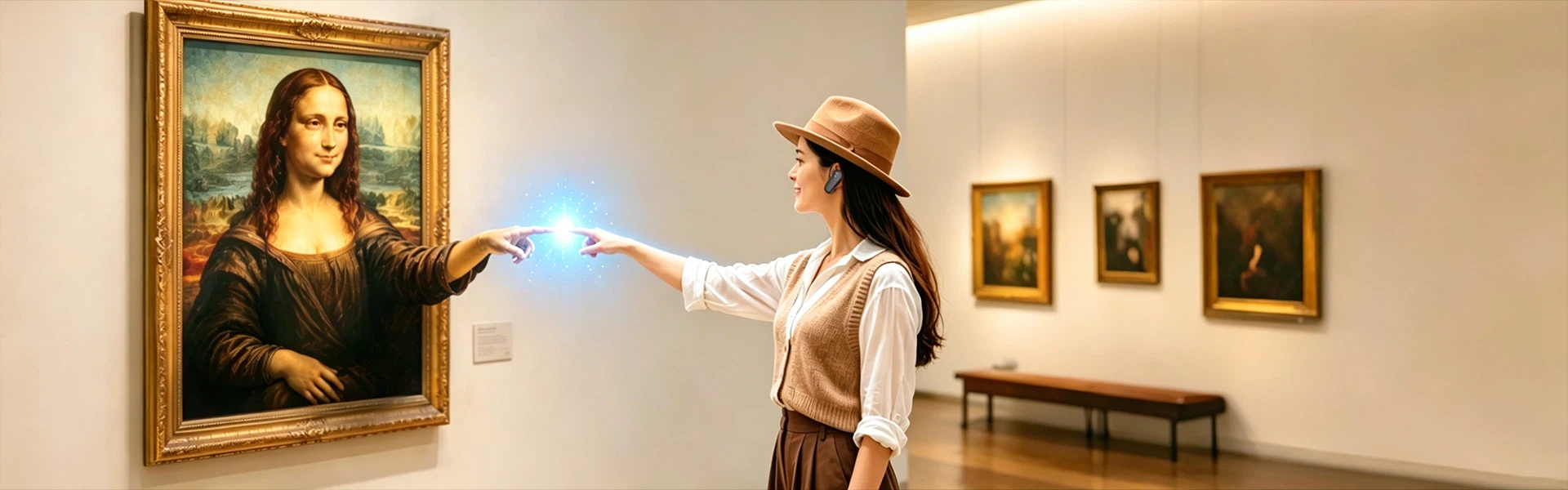
Why Factory Tours Are a Different Category of Problem
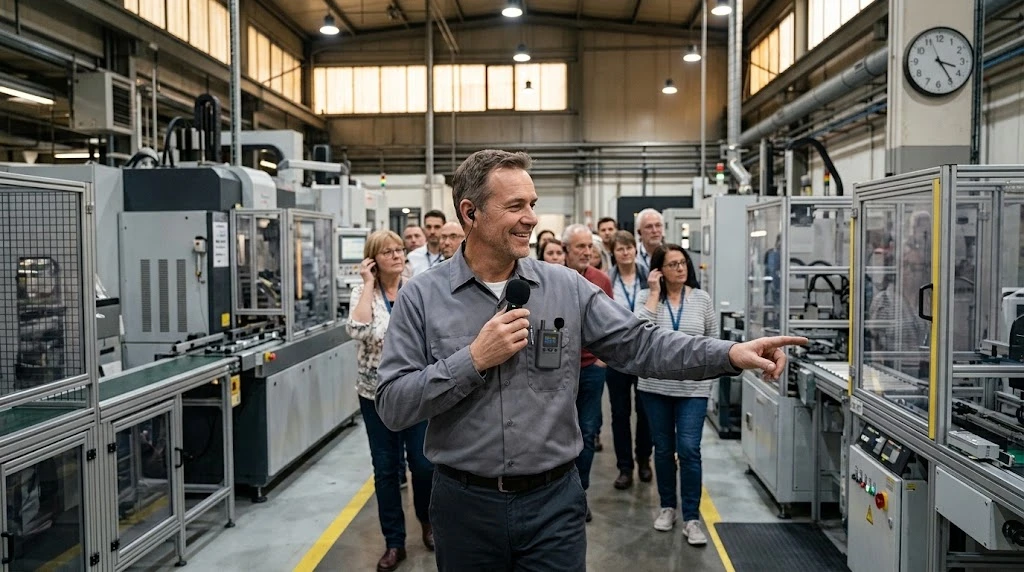
A factory tour isn't a scenic walk with commentary - it's a controlled visit through a working production environment, often with restrictions a museum or heritage site never has to think about. Cleanroom protocols that limit what can be brought onto the floor. Confidentiality concerns around proprietary processes visible during the walkthrough. Ambient noise from active machinery competing with a guide's voice. Equipment built for general tourism applications doesn't always translate cleanly into this setting, and venues running industrial visits regularly are better served thinking through these constraints specifically rather than assuming standard tour guide equipment will work as-is.
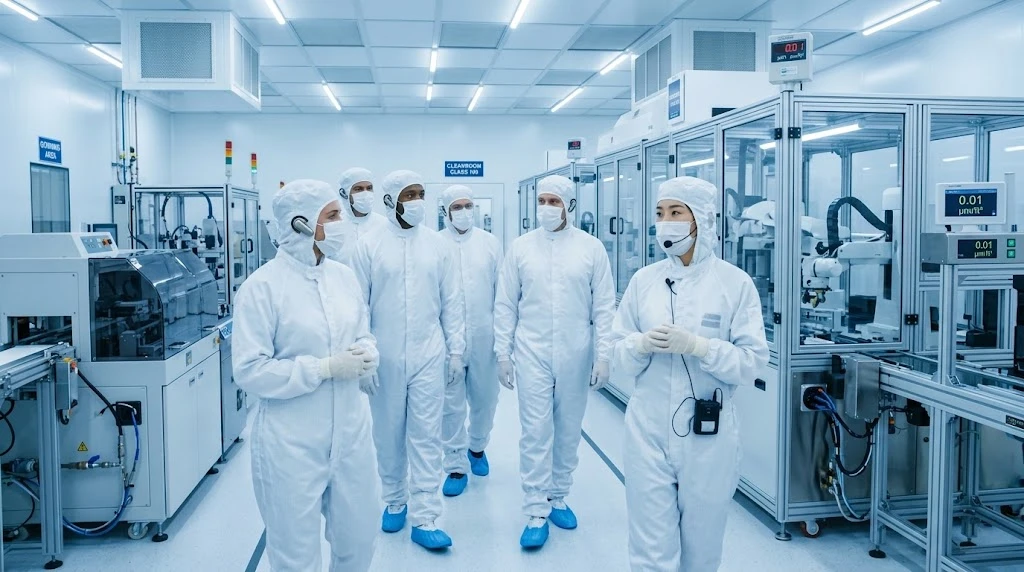
The Cleanroom Compatibility Question
Cleanrooms and controlled production environments typically restrict equipment based on what it might introduce into the space - dust, particulates, or contamination risk from materials that shed fibers or degrade under repeated handling. This isn't usually a formal certification question for tour guide equipment specifically, but it does mean device housing material and overall build quality matter more here than in a typical outdoor or museum setting, where this consideration simply doesn't apply.
Equipment used in these settings should also hold up to more frequent sanitization than standard tourism use, since cleanroom-adjacent visits often require wiping down any equipment brought through gowning areas between groups. A device with a smooth, sealed housing rather than seams or textured surfaces that trap residue is generally easier to keep compliant with a facility's own cleaning protocols.
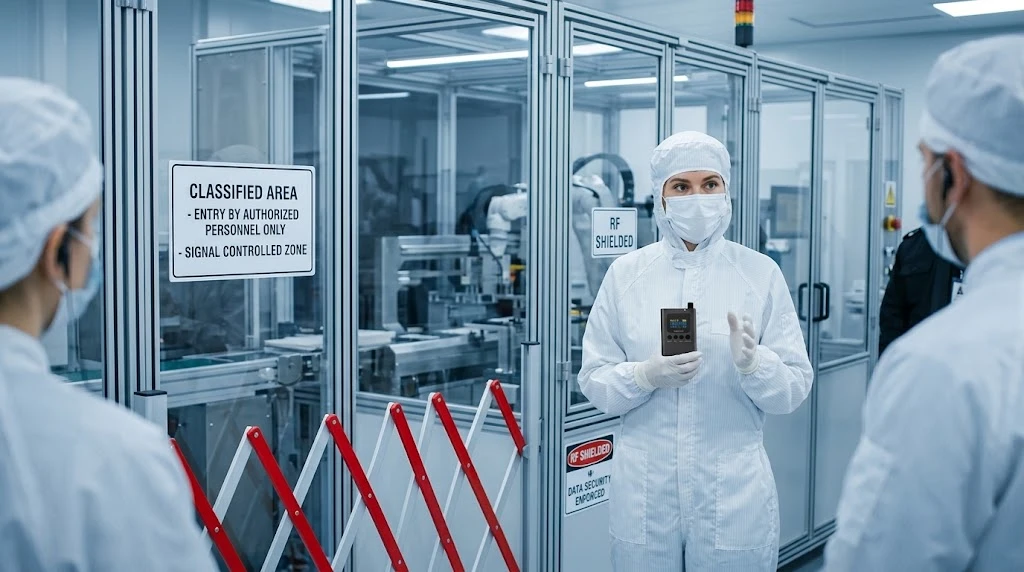
Confidentiality: A Signal Problem, Not Just a Content Problem
Factories hosting visitors while protecting proprietary processes face a specific equipment consideration that doesn't come up in tourism settings: whether the tour's audio signal is contained to the group itself, or whether it could realistically be picked up outside the intended area. This is less about encryption in a formal cybersecurity sense and more about basic signal design - a system with a shorter, tightly controlled transmission range and dedicated channel assignment reduces the chance of commentary about sensitive processes being incidentally receivable outside the tour group, compared to a system built for long-range, wide-coverage transmission.
For facilities with heightened confidentiality requirements, this is also where frequency band choice becomes relevant. A system offering a UHF option alongside standard 2.4G gives facilities more flexibility to operate on a band less commonly monitored by casual nearby wireless activity, which can be a meaningful consideration for visits involving genuinely sensitive production areas.
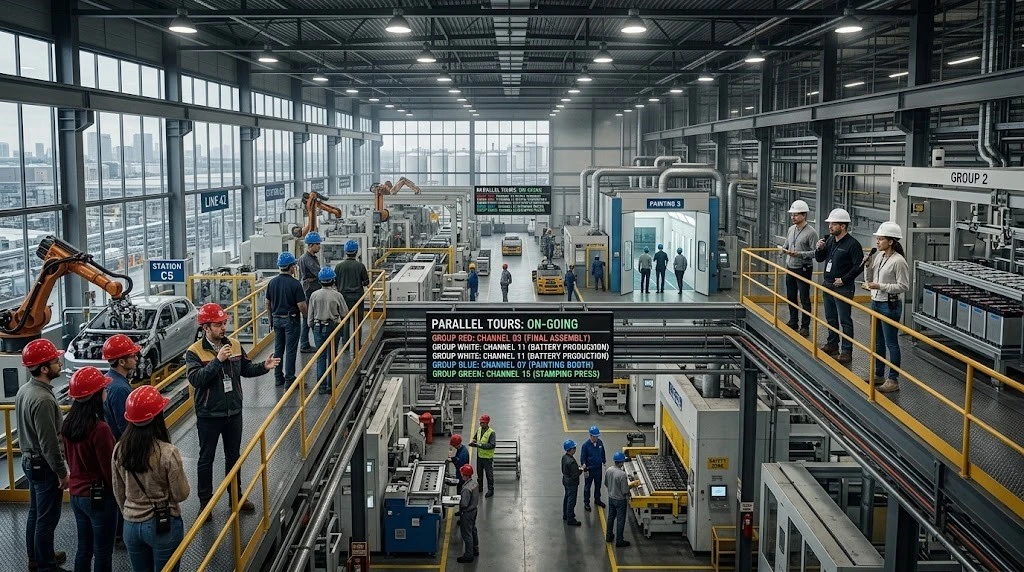
Where the L7 Fits This Use Case
The YINGMI L7 is a reasonable fit for factory tour applications specifically because of a few structural details. It offers dual-frequency operation - 2.4G or UHF in the 663–694MHz range - giving facilities the option to run on UHF for visits where signal containment is a higher priority. With up to 150 adjustable channels, multiple simultaneous factory tours (common at larger industrial parks running several visitor groups through different production lines at once) can be assigned genuinely separate channels rather than sharing limited frequency space.
On the physical side, the L7 receiver weighs 15g and the transmitter 48g - light enough that guides leading multiple back-to-back tours through a facility, often while also wearing required PPE, aren't dealing with additional equipment fatigue on top of everything else a factory visit already involves. Battery life is rated at 15 hours per charge on a 2.5-hour charging cycle (internal testing has shown real-world performance reaching closer to 20 hours under typical use, though actual results vary with usage pattern and should be verified for any specific operating schedule), which comfortably covers a full day of scheduled facility tours without a forced recharge mid-shift.
Noise Isn't Just an Audio Problem in a Factory Setting
Active production floors generate mechanical noise that competes directly with a guide's voice, which makes microphone quality and clear voice reproduction more important here than in quieter tourism settings. A tour guide system that sounds fine in a quiet showroom demo can struggle noticeably once tested against real machinery noise, so facilities evaluating equipment for factory tour use should specifically request a demo under conditions resembling the actual production floor - not just a standard product walkthrough - before committing to a purchase.
A Practical Checklist for Factory Tour Equipment
Facilities planning or expanding guided visits through production areas are generally well served checking a few things before purchase: whether device housing meets the facility's own cleanroom or hygiene protocols, whether frequency options support the level of signal containment the visit requires, whether the system has been tested against realistic ambient noise levels rather than just a quiet demo, and whether battery life comfortably covers the facility's actual tour schedule rather than just meeting it on paper.
FAQs
Q: Does UHF frequency actually prevent a factory tour's audio from being intercepted outside the group?
A: UHF isn't a security feature in a formal sense, but operating on a less commonly monitored band, combined with shorter effective range and dedicated channel assignment, reduces the practical likelihood of incidental reception outside the intended group compared to systems built for long-range, widely-monitored bands.
Q: Is cleanroom compatibility something a tour guide equipment supplier can formally certify?
A: Generally no - cleanroom compliance is typically governed by the facility's own protocols rather than a standardized certification for consumer or tourism electronics. Facilities should confirm directly whether a specific device's housing and materials meet their own cleanroom or contamination-control requirements.
Q: Can the same equipment be used for both factory tours and standard scenic or museum tours?
A: Yes, in most cases - equipment like the L7 isn't built exclusively for industrial use. Facilities running both factory visits and other types of guided tours can generally use the same equipment across both, provided frequency and channel needs are consistent.


