

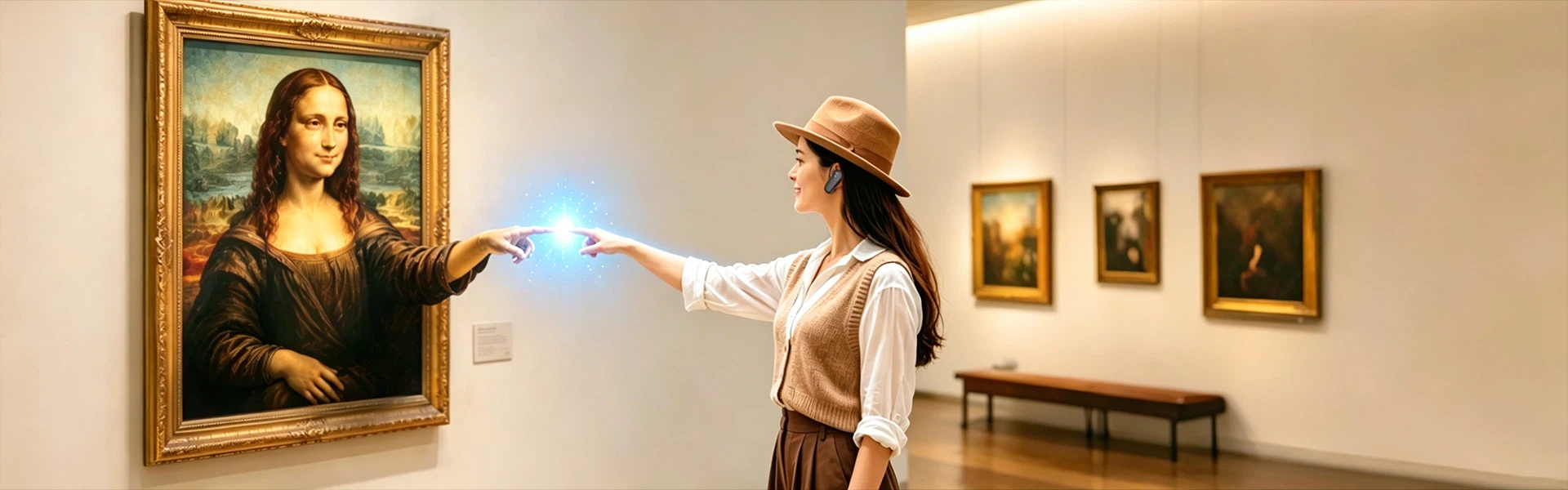
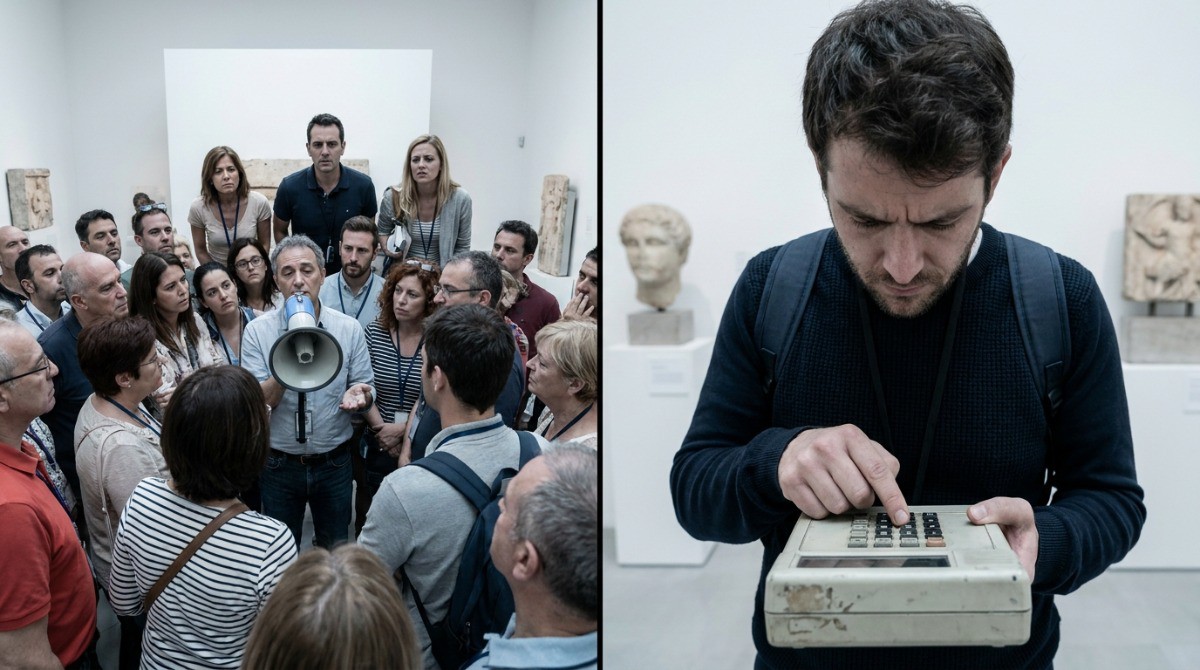
Several common challenges persist in large museum visits: visitors often miss key commentary when crowded around tour guides; they cannot freely adjust their stay time at exhibits based on personal interest; and text labels have limited information capacity, failing to meet diverse learning needs. Driven by the upgrading of cultural consumption and digital transformation, an increasing number of visitors prefer self-guided tours, prompting museums to shift their service model from passive information display to active experience delivery. As a core technical bridge connecting audiences and exhibits, self-guided audio guide systems have become a standard essential tool for large museums to improve their independent visiting services.
1. Evolving Demands for Museum Interpretation Services
Limitations of Traditional Interpretation Methods
Traditional museum interpretation relies primarily on two forms: exhibit text labels and on-site human-guided tours. Text labels are restricted by display space and can only present basic information such as name, age, and excavation site. Human-guided tours, meanwhile, are constrained by time, group size, and fixed routes, making it difficult to adapt to different visitors' paces and interests-especially failing to meet the independent needs of free independent travelers.
Pain Points of Early Audio Guides
While audio guide technology can provide multi-language translation and supplementary background information, most early push-button audio guide devices deployed in museums have low usage rates. Industry survey data shows that complex operation procedures, the need to manually enter exhibit numbers, unengaging content, and mismatched commentary points with actual visiting routes are the main reasons visitors abandon their use.
Characteristics of Modern Visitors' Self-Guided Needs
Modern visitors' demands for museum interpretation show a clear trend toward self-service and diversification. Most visitors want to plan their own routes, stay freely at exhibits that interest them, and access multi-language support and tiered content interpretation. Cross-cultural visitor groups have particularly strong demand for hands-free automatic commentary services.
2. Core Advantages of Self-Guided Audio Guide Systems
Complete Freedom in Visiting Pace
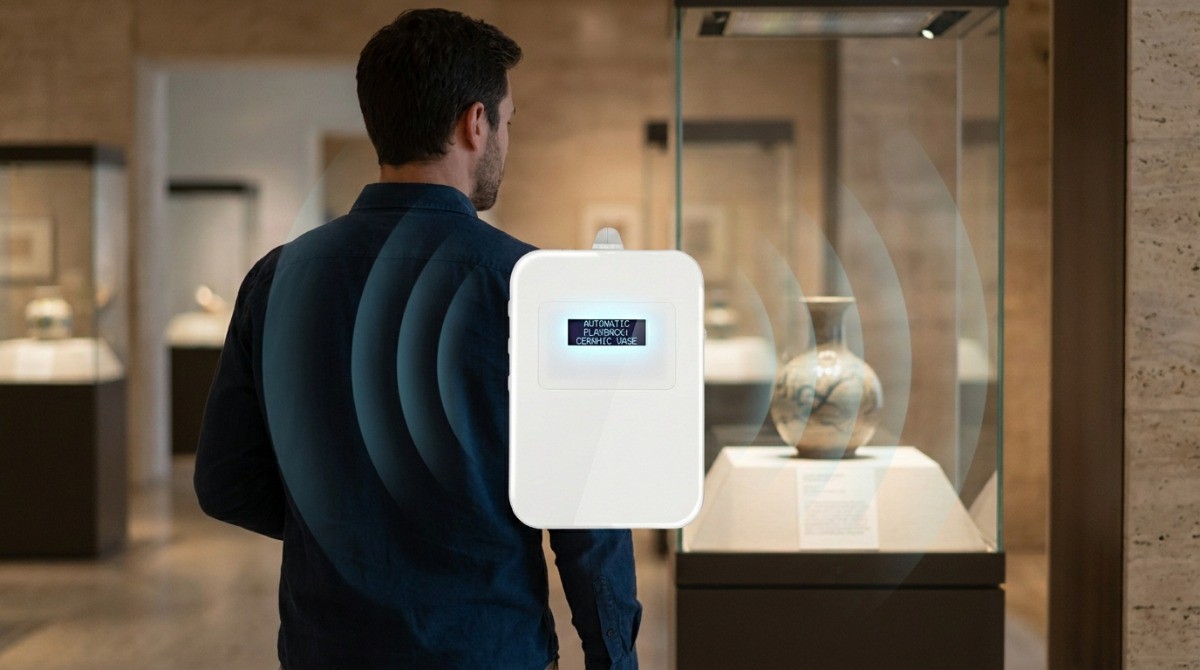
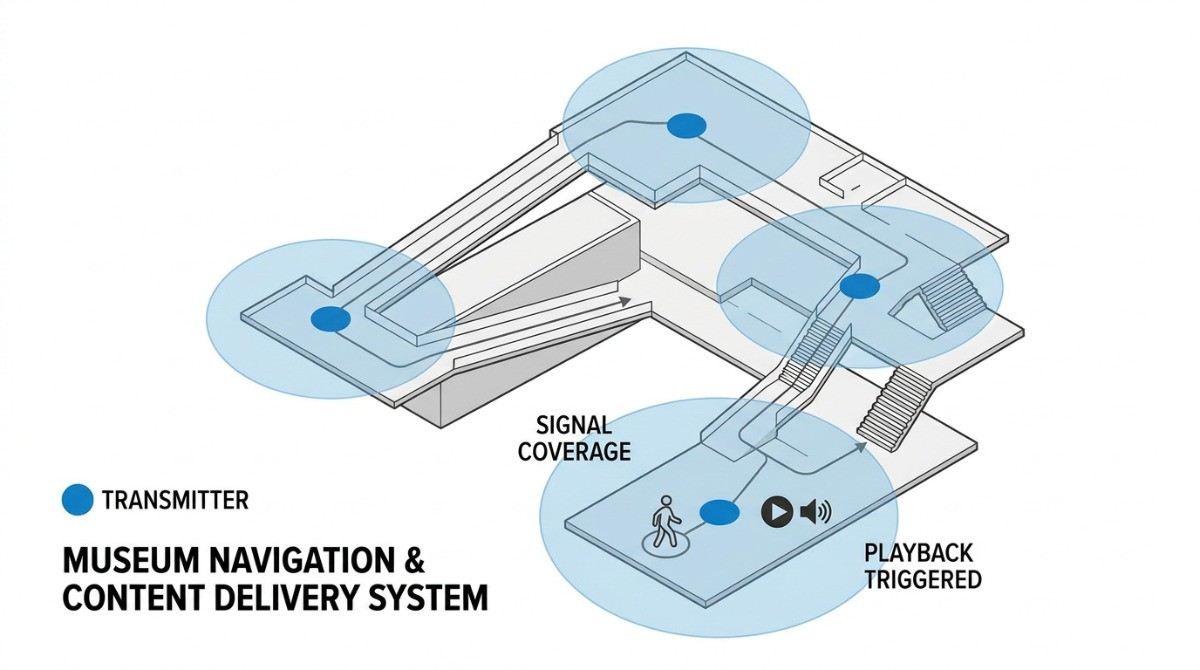
Self-guided audio guide systems allow visitors to move freely throughout the exhibition hall without following fixed tour groups. Advanced automatic induction technology enables devices to play commentary automatically when visitors approach corresponding exhibits or zones, eliminating the need for manual operation. Models such as the Yingmi M7 automatic induction audio guide system deliver stable signal coverage and precise point triggering, ensuring a seamless independent visiting experience.
HD Audio Quality and Ambient Noise Cancellation
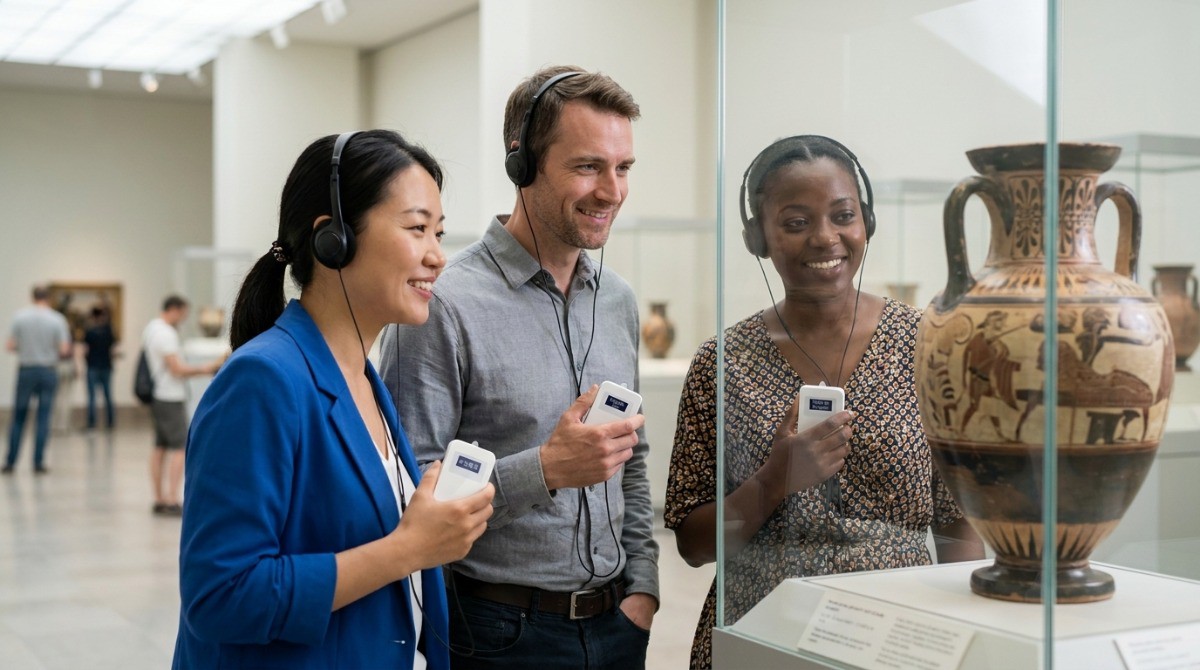
Self-guided audio devices are equipped with professional audio processing and noise cancellation technology, which effectively filters out background noise in exhibition halls and improves the clarity of commentary. Meanwhile, individual headphone listening prevents sound interference between different visitors, maintaining a quiet and orderly visiting environment.
Multi-Language Support and Targeted Content Delivery
Modern self-guided audio guide systems support multi-language switching and speed adjustment, meeting the language needs of visitors from different countries. Some systems offer content modules of varying depths and themes, designing differentiated commentary for adults, children, and professional enthusiasts to achieve targeted information delivery.
Dual Support for Group Tours and Self-Guided Visits
High-quality self-guided audio guide systems such as Yingmi M7C audio guide system typically support group tour mode simultaneously. For collective visiting scenarios such as educational groups and study tours, they can switch to "one-to-many" real-time commentary, allowing one guide to cover dozens to hundreds of listeners simultaneously. This improves interpretation efficiency while facilitating group order management.
3. Industry Applications and Practices of Self-Guided Audio Guide Systems
Case Studies of Large Domestic Museums
In recent years, many large museums in China have completed the deployment and application of self-guided audio guide systems:
Hubei Provincial Museum: Introduced self-guided audio devices and 24-hour self-service headphone rental cabinets, supporting multi-language content switching and free route selection. According to museum statistics, this measure has increased visitor efficiency by approximately 30% while reducing the workload of human guides.
Shanghai Science and Technology Museum: Deployed an automatic induction self-guided audio system, designing differentiated content modules for visitors of different ages. This has achieved targeted interpretation services in popular science education zones, significantly increasing children's participation.
Guangdong Museum: Deployed self-guided audio devices in large temporary special exhibitions, providing audio commentary services for thousands of visitors simultaneously. Visitor behavior data generated by the system backend can be used for exhibition route optimization and content adjustment.
International Museum Application Trends
Internationally, world-class museums such as The Metropolitan Museum of Art and The Louvre have completed technical upgrades of their intelligent self-guided audio systems. Automatic induction commentary, multi-language support, in-depth content interpretation, and personalized route recommendation have become standard service configurations for large international museums.
4. Key Selection Criteria for Museum Self-Guided Audio Guide Systems
Accuracy of Automatic Induction and Coverage Capability
Museum buildings often have complex structures with numerous walls and partitions. Self-guided audio guide systems must have strong anti-interference capabilities to achieve seamless signal coverage in complex indoor environments, while ensuring accurate induction triggering to avoid unintended playback or missed triggers.
Audio Quality and Noise Cancellation Performance
Audio quality and noise cancellation performance are core indicators affecting the visiting experience. The system must support high-definition audio transmission and have effective ambient noise filtering capabilities to ensure clear listening even in crowded exhibition halls.
Content Management and Data Analytics Functions
The system should have a convenient backend content update mechanism, allowing museums to adjust commentary content in real time according to exhibition changes. Meanwhile, statistical and analytical functions for visitor behavior data can provide data support for exhibition planning and service optimization.
Device Usability and Self-Service Capability
Audio guide devices should be lightweight and designed for comfortable long-term wear. The operation interface should be simple and intuitive to lower the usage threshold for visitors of all ages. Additionally, supporting self-service rental, return, and charging systems should operate stably to reduce manual intervention.
5. Yingmi Self-Guided Audio Guide Solutions for Museums
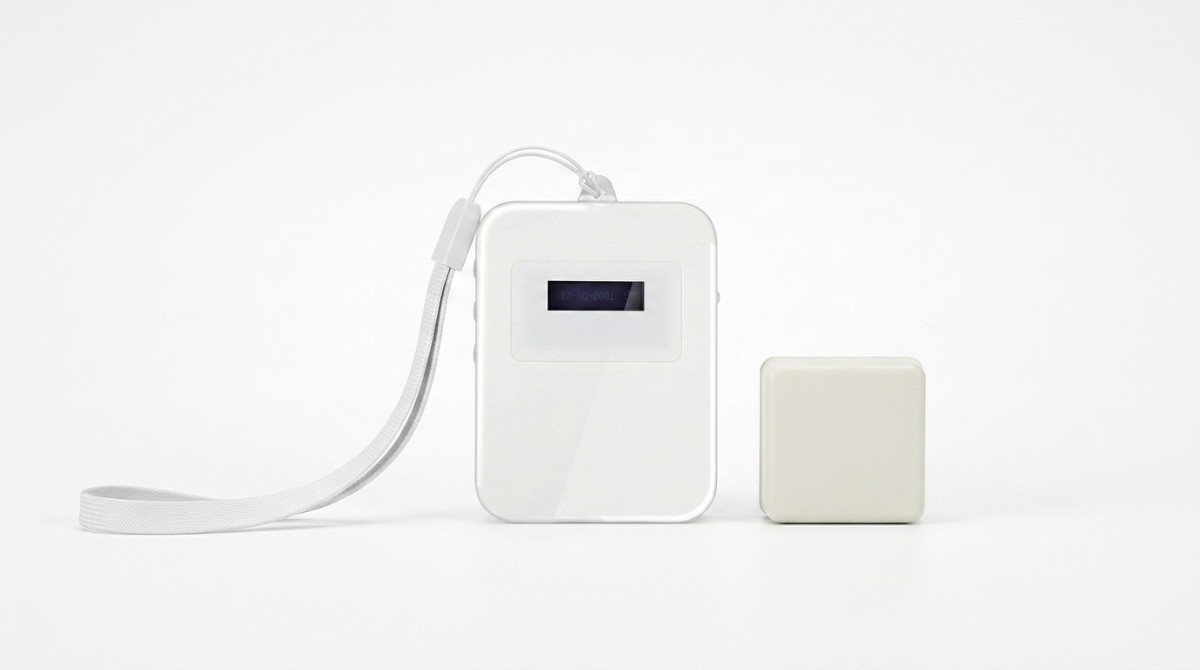
As a leading professional audio guide system manufacturer in China, Yingmi has designed a complete solution tailored to the self-guided visiting needs of the cultural and museum industry. Its automatic induction technology adapts well to the complex indoor architectural structures of museums, ensuring stable signals and accurate triggering. The flexible content management and update mechanism supports multi-language content deployment and targeted content design, while the lightweight device design and simplified operation process are suitable for users of all ages.
As an important supplement to human-guided tours, self-guided audio guide systems effectively improve the efficiency of information transmission in museums and meet the diverse visiting needs of different audiences. With the development of artificial intelligence and Internet of Things technologies, museum self-guided audio guide systems will gradually achieve more intelligent interactive functions, bringing richer visiting experiences to audiences.


